
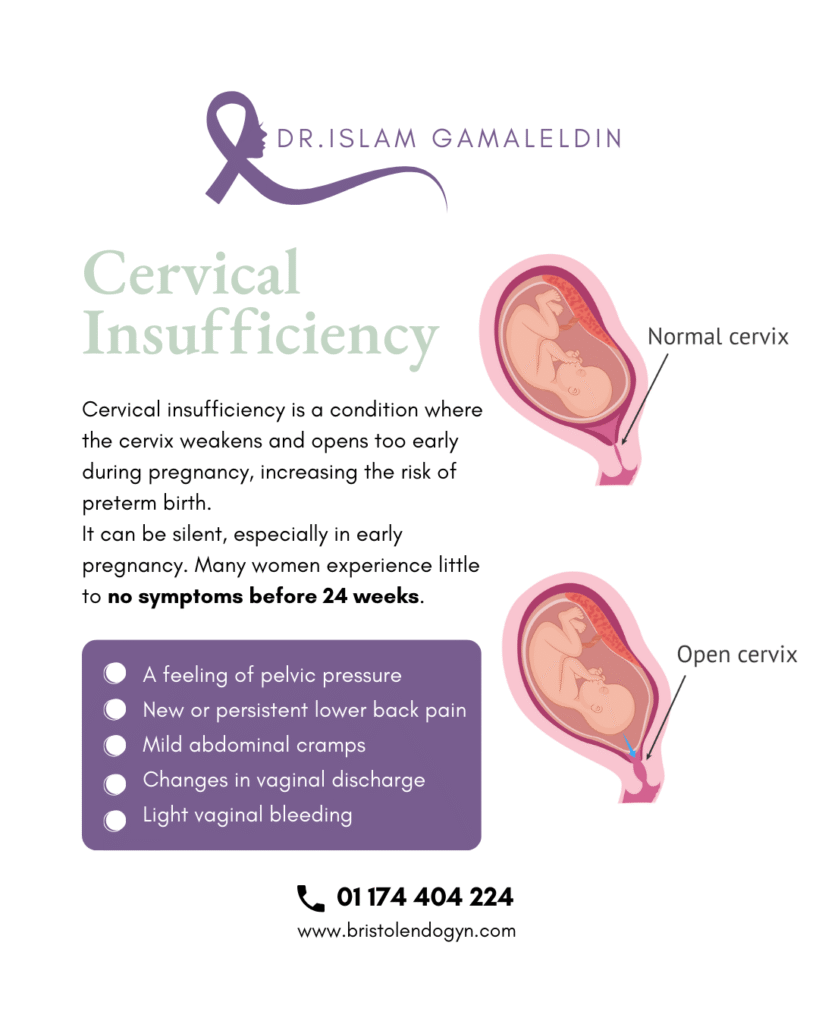
Cervical insufficiency, also known as an incompetent cervix, is a condition in which the cervix begins to weaken, shorten, or open too early during pregnancy. This premature opening can significantly increase the risk of miscarriage or preterm birth, particularly during the second trimester.
Because the condition is often silent, early awareness and proper medical follow-up are essential for protecting both maternal and fetal health.
What Is Cervical Insufficiency?
During a healthy pregnancy, the cervix remains firm, long, and closed until late in the third trimester. In cases of cervical insufficiency, the cervix is unable to maintain its structural strength and may begin to open without contractions or pain.
This can lead to pregnancy loss or premature delivery if not identified and managed in time.
Why Is Cervical Insufficiency Challenging?
One of the main difficulties with cervical insufficiency is that it often presents with few or no symptoms, especially early in pregnancy. Many women are unaware of the condition until complications occur, typically before 24 weeks of gestation.
This is why regular prenatal care and appropriate screening for at-risk patients are critical.
Symptoms to Watch For
Although symptoms may be mild or absent, some warning signs can include:
- A feeling of pelvic pressure
- New or persistent lower back pain
- Mild abdominal or menstrual-like cramps
- Changes in vaginal discharge (increase, watery or mucus-like)
- Light vaginal bleeding or spotting
If any of these symptoms occur, it is important to seek medical advice promptly.
Who Is at Higher Risk?
Cervical insufficiency may be more likely in women who have:
- A history of second-trimester pregnancy loss
- Previous preterm birth
- Prior cervical surgery (such as LEEP or cone biopsy)
- Congenital uterine or cervical abnormalities
A detailed medical history and ultrasound monitoring can help identify those at higher risk.
Diagnosis and Management
Diagnosis is often made through transvaginal ultrasound, which measures cervical length during pregnancy. If cervical shortening or opening is detected early, several management options may be considered, including:
- Close ultrasound surveillance
- Progesterone therapy
- Cervical cerclage (a surgical procedure to reinforce the cervix)
The appropriate treatment depends on individual risk factors and pregnancy history.
The Importance of Early Detection
Early diagnosis and personalized care can significantly improve pregnancy outcomes. If cervical insufficiency is suspected or identified early, proactive management can help prolong pregnancy and reduce the risk of preterm birth.
When to Seek Specialist Care
If you have risk factors, previous pregnancy complications, or concerning symptoms, consulting a specialist in gynecology or high-risk pregnancy is strongly recommended.
📞 01 174 404 224
🌐 www.bristolendogyn.com
📍 Spire Bristol Hospital, The Glen, Redland Hill, Redland, Bristol BS6 6UT, United Kingdom