
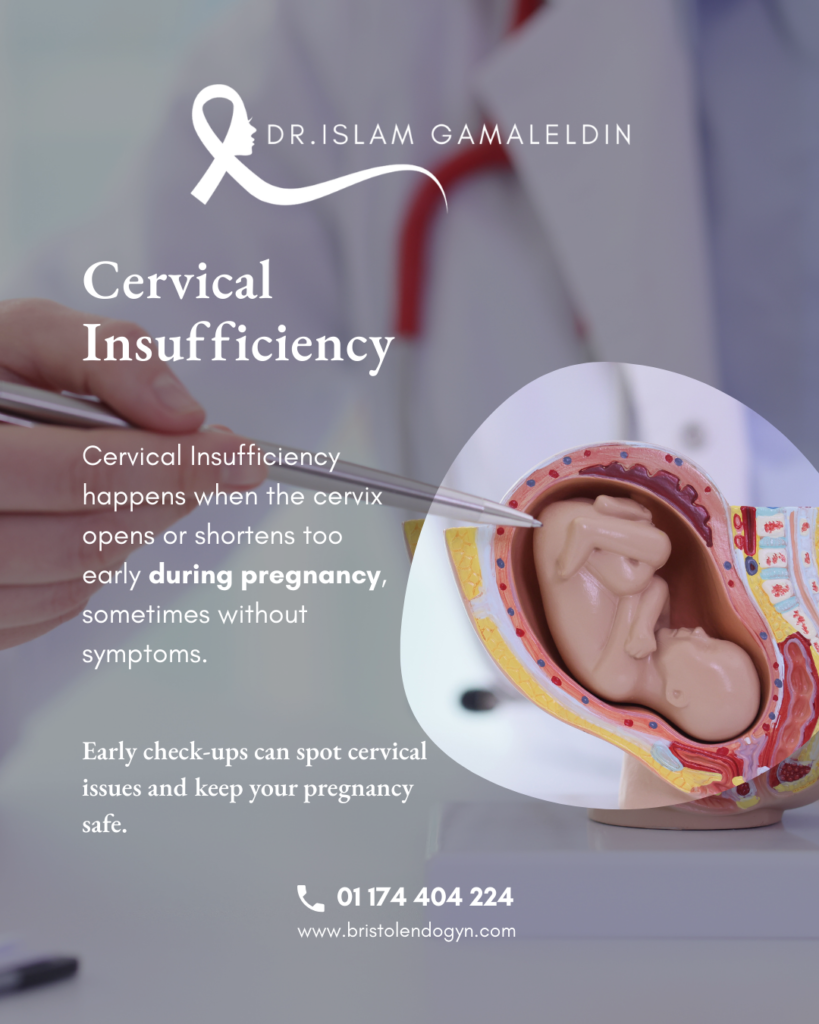
What Is Cervical Insufficiency?
Cervical insufficiency, also called incompetent cervix, occurs when the cervix begins to shorten, weaken, or open too early during pregnancy without contractions or pain. This condition can increase the risk of miscarriage or premature birth, usually during the second trimester.
The cervix normally remains closed and firm until late pregnancy. In cervical insufficiency, however, the cervix may open prematurely, making early monitoring essential for a healthy pregnancy.
Causes of Cervical Insufficiency
Several factors may increase the risk of cervical insufficiency, including:
- Previous cervical surgery (such as LEEP or cone biopsy)
- Trauma or injury to the cervix
- Congenital cervical abnormalities
- Previous second-trimester pregnancy loss
- Structural uterine abnormalities
- Connective tissue disorders
In some cases, the exact cause remains unknown.
Symptoms of Cervical Insufficiency
Cervical insufficiency may occur without noticeable symptoms, which is why regular prenatal checkups are crucial.
However, some women may experience:
- Mild pelvic pressure
- Back pain
- Light vaginal bleeding or spotting
- Increased vaginal discharge
- Mild abdominal cramps
Because symptoms can be subtle, ultrasound monitoring of cervical length is often the best way to detect the condition early.
How Cervical Insufficiency Is Diagnosed
Doctors usually diagnose cervical insufficiency through:
1. Medical History
A history of second-trimester pregnancy losses or preterm births may raise suspicion.
2. Transvaginal Ultrasound
This test measures cervical length and can identify early cervical shortening.
3. Physical Examination
In some cases, doctors may observe early dilation of the cervix during examination.
Early diagnosis allows doctors to take steps to help protect the pregnancy.
Treatment Options for Cervical Insufficiency
Treatment depends on the pregnancy stage and medical history.
Cervical Cerclage
A cerclage is a surgical procedure in which a strong stitch is placed around the cervix to keep it closed during pregnancy.
Progesterone Therapy
Hormonal treatment may help reduce the risk of preterm birth.
Activity Modification
Doctors may recommend reduced physical activity or pelvic rest in some cases.
Close Monitoring
Frequent ultrasounds may be used to monitor cervical length throughout pregnancy.
Can Cervical Insufficiency Be Prevented?
While cervical insufficiency cannot always be prevented, early prenatal care greatly reduces risks. Women with a history of pregnancy loss or cervical surgery should inform their doctor early in pregnancy so appropriate monitoring can begin.
When to See a Specialist
If you have experienced:
- Recurrent pregnancy loss
- Premature birth
- Cervical surgery
- Unexplained second-trimester miscarriage
Consulting a specialist in obstetrics and maternal care can help ensure proper evaluation and management.
Protecting Your Pregnancy
Early check-ups and monitoring can help detect cervical problems before complications occur. With proper care and medical support, many women with cervical insufficiency go on to have healthy pregnancies and successful deliveries.