
Ovarian Cysts: Symptoms, Causes, and When to Seek Medical Advice

Jan 30, 2026

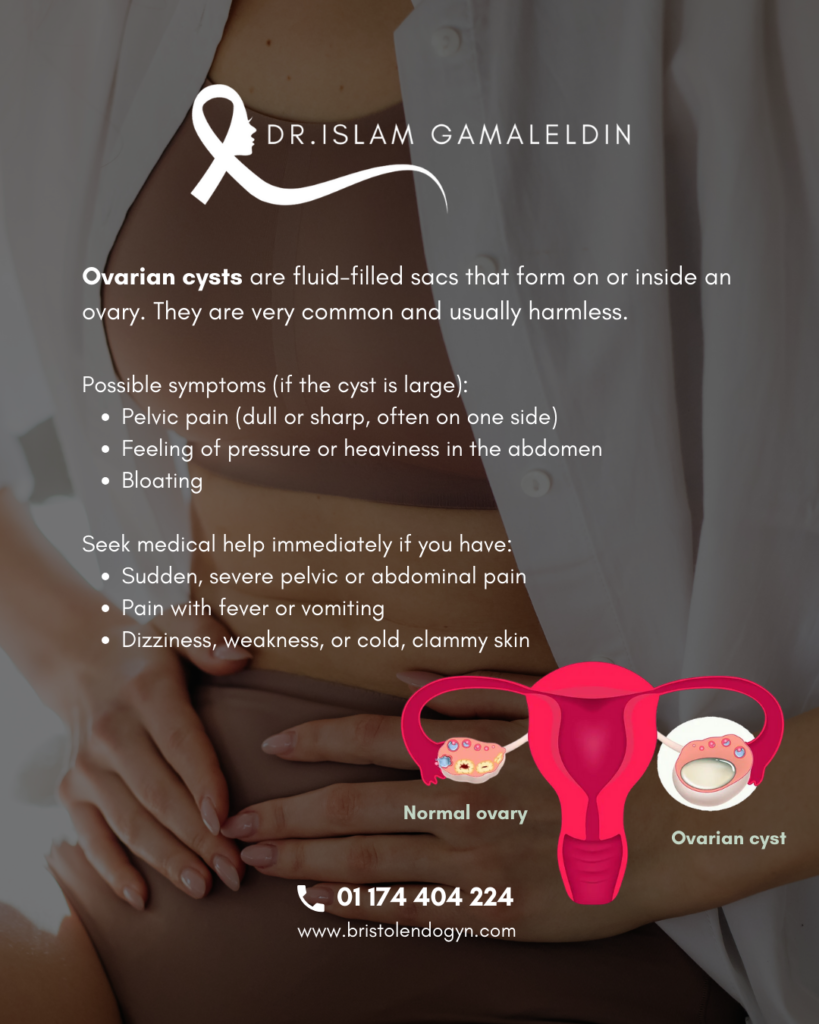
Ovarian cysts are fluid-filled sacs that develop in or on an ovary. They are very common and, in most cases, harmless, often resolving on their own without treatment. However, some ovarian cysts can cause discomfort or complications and should be properly assessed by a specialist. Knowing when ovarian cysts are not normal is essential for protecting your health.


What Are Ovarian Cysts?

Ovarian cysts are sacs filled with fluid or semi-solid material that form on the ovaries. They are most frequently linked to the menstrual cycle and are especially common during the reproductive years.

Most ovarian cysts:

  • Are benign (non-cancerous)
  • Cause no symptoms
  • Disappear naturally over time

Common Symptoms of Ovarian Cysts

While many women have ovarian cysts without noticing any symptoms, others may experience:

  • Pelvic pain, dull or sharp, often on one side
  • A feeling of abdominal pressure or heaviness
  • Bloating or abdominal swelling
  • Discomfort during physical activity or intercourse

Symptoms can vary depending on the size and type of cyst.


When Can Ovarian Cysts Become a Concern?

Although most ovarian cysts are harmless, complications can occasionally occur, such as:

  • Cyst rupture
  • Ovarian torsion (twisting of the ovary)
  • Internal bleeding

These situations may require urgent medical attention.


When Should You Book an Appointment?

You should seek immediate medical care if you experience:

  • Sudden, severe pelvic or abdominal pain
  • Pain associated with fever or vomiting
  • Dizziness, weakness, or cold, clammy skin

These symptoms may indicate a medical emergency and should never be ignored.


Diagnosis and Management of Ovarian Cysts

At Bristol Endogyn, diagnosis may include:

  • A detailed medical history and pelvic examination
  • Pelvic ultrasound or advanced imaging
  • Blood tests when appropriate

Management depends on your symptoms, age, and the type of cyst, and may include:

  • Careful monitoring
  • Hormonal treatment
  • Minimally invasive surgery if required

The aim is always to provide safe, personalised care while preserving ovarian health whenever possible.


Expert Care for Ovarian Cysts in Bristol

If you are experiencing pelvic pain, bloating, or have been diagnosed with an ovarian cyst, specialist assessment can offer reassurance and effective treatment options.

📍 Spire Bristol Hospital, The Glen, Redland Hill, Redland, Bristol BS6 6UT, UK
📞 01 174 404 224
🌐 www.bristolendogyn.com

Endometriosis Lifestyle Tips: Diet, Movement, and Stress Management

Living with endometriosis can be challenging, but daily lifestyle choices may help reduce symptoms and improve overall wellbeing. While lifestyle changes are not a cure, they can play an important supportive role alongside medical treatment. Focus on Anti-Inflammatory...

What Is Endometriosis?

Endometriosis is a chronic condition where tissue similar to the lining of the uterus (endometrium) grows outside the womb. This tissue can be found on the ovaries, fallopian tubes, bladder, bowel, and other pelvic structures. Unlike normal uterine lining, this tissue...

Signs of Gynaecological Problems You Shouldn’t Ignore

Signs You Shouldn’t Ignore: Understanding Common Gynaecological Symptoms Women often dismiss symptoms such as pelvic discomfort, bloating, or irregular bleeding as part of everyday life. However, persistent or unusual symptoms may indicate an underlying gynaecological...

Robotic Surgery for Endometriosis | BSGE Conference

Advancing Endometriosis Care: Insights from the BSGE Conference It was an honour to speak at the BSGE Conference in London alongside leading experts in minimally invasive gynaecology and endometriosis care. The discussions focused on the challenges of thoracic...

Endometriosis Specialist in Bristol | Dr. Islam Gamaleldin

If you've been living with chronic pelvic pain, difficult periods, or unexplained fertility issues, you may be dealing with endometriosis — a condition that affects 1 in 10 women yet remains widely underdiagnosed. Finding the right endometriosis specialist in Bristol...

Period Pain: Causes, Symptoms & Treatments | Dr. Islam Gamaleldin

Period pain is one of the most common gynaecological complaints, yet it is also one of the most misunderstood. While mild cramping during menstruation is considered normal, severe period pain that affects your work, sleep, or daily activities should never be...

Fibroids: Symptoms, Causes, Diagnosis, and Treatment Options

What Are Fibroids? Fibroids are non-cancerous growths that develop in or around the uterus. They are one of the most common gynecological conditions affecting women, especially during reproductive years. Fibroids can vary in size, number, and location, and while some...

Period Pain Isn’t Normal: When to Seek Help for Menstrual Pain

Many women are told that painful periods are simply part of life. While mild discomfort can happen during menstruation, severe or persistent period pain should never be ignored. Pain that disrupts your daily life may be a sign of an underlying gynecological condition...

Uterine Fibroids: Symptoms, Causes & Treatment Options

Uterine fibroids are a common condition affecting many women, especially during their reproductive years. Although uterine fibroids are non-cancerous, they can cause a variety of symptoms that may impact daily life and fertility. In this article, we explain what...

Adenomyosis: When Painful Periods Are More Than “Just Your Cycle”

Struggling with heavy periods and intense cramps? It might be more than just your cycle. Many women silently endure painful menstruation, not realizing it could be a medical condition called adenomyosis. Understanding adenomyosis is the first step toward finding...