
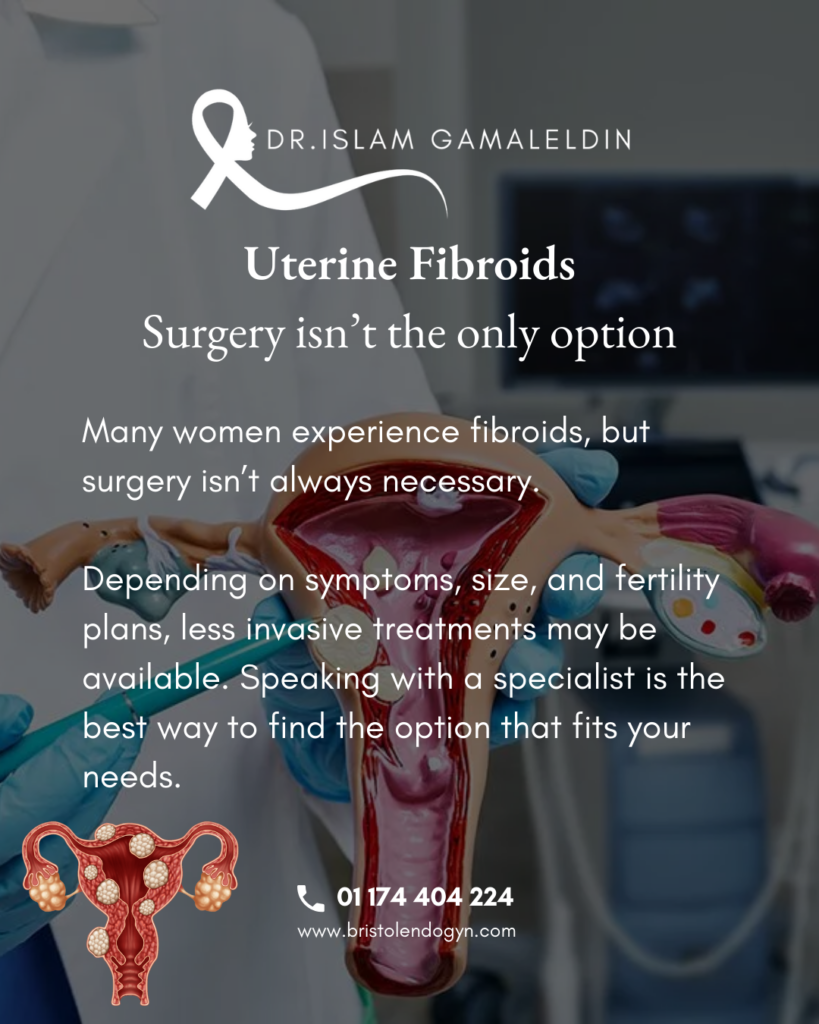
Uterine Fibroids: Surgery Isn’t the Only Option

Jan 9, 2026

Uterine fibroids are noncancerous growths in the uterus that affect many women during their reproductive years. While surgery is often seen as the primary solution, it isn’t the only option. Understanding alternative treatments can help manage symptoms and improve quality of life.

What Are Uterine Fibroids?

Fibroids are benign tumors that develop from the muscular tissue of the uterus. They can vary in size, number, and location. Common symptoms include:

  • Heavy menstrual bleeding
  • Pelvic pressure or pain
  • Frequent urination
  • Back or leg pain
  • Fertility challenges in some cases

Not all fibroids require treatment. Many women with small, asymptomatic fibroids can monitor them without intervention.

Non-Surgical Treatment Options

  1. Medications:
    • Hormonal therapies, such as birth control pills or progesterone-releasing IUDs, can help regulate periods and reduce bleeding.
    • Gonadotropin-releasing hormone (GnRH) agonists may shrink fibroids temporarily.
    • Non-hormonal medications can help relieve pain and reduce heavy bleeding.
  2. Minimally Invasive Procedures:
    • Uterine artery embolization (UAE): Blocks blood flow to fibroids, causing them to shrink.
    • MRI-guided focused ultrasound: Uses high-frequency ultrasound waves to destroy fibroid tissue.
  3. Lifestyle and Home Approaches:
    • Maintaining a healthy weight and exercising regularly may help manage symptoms.
    • Dietary adjustments, including reducing red meat and increasing fruits and vegetables, can support overall uterine health.

When Is Surgery Necessary?

Surgery may be recommended for women with:

  • Very large fibroids causing significant pain or pressure
  • Fibroids affecting fertility or pregnancy
  • Fibroids that do not respond to other treatments

Surgical options include myomectomy (removal of fibroids while preserving the uterus) or hysterectomy (removal of the uterus). Your doctor can help determine the best approach based on your symptoms, age, and reproductive plans.

Conclusion

Uterine fibroids don’t always mean surgery. Many effective non-surgical options exist, from medications to minimally invasive procedures. Early diagnosis and personalized treatment can help manage symptoms, improve comfort, and preserve fertility when needed.


Understanding the Difference Between Adenomyosis & Endometriosis

Adenomyosis and endometriosis are two gynecological conditions that often get confused due to their overlapping symptoms. Both affect the uterus and can cause pelvic pain, heavy menstrual bleeding, and discomfort, but they are distinct in how they develop and how they...

Cervical Insufficiency

Cervical insufficiency, also known as an incompetent cervix, is a condition in which the cervix begins to weaken, shorten, or open too early during pregnancy. This premature opening can significantly increase the risk of miscarriage or preterm birth, particularly...

How exercise can help you live better with endometriosis ?

Endometriosis is a chronic condition that affects around one in ten women during their reproductive years. Characterised by the presence of tissue similar to the uterine lining growing outside the uterus, it can lead to persistent pelvic pain, debilitating fatigue,...

Is It Just a Painful Period… or Something More?

Many women assume painful periods are normal. But sometimes, they may signal endometriosis, a chronic condition where tissue similar to the uterine lining grows outside the uterus. Ignoring the signs can delay diagnosis and affect fertility, health, and quality of...

Can You Get Pregnant with Endometriosis?

Endometriosis is a gynecological condition affecting around 10% of women of reproductive age. It occurs when tissue similar to the uterine lining grows outside the uterus, causing pain, heavy periods, and sometimes infertility. But is it possible to get pregnant while...

5 Signs of Endometriosis You Should Never Ignore

Endometriosis is a complex and often silent condition that affects nearly one in ten women. Yet many go years—sometimes more than a decade—without receiving the correct diagnosis. Symptoms are frequently normalised, dismissed, or mistaken for “typical” menstrual pain....

Specialist in Women’s Health, Endometriosis & Advanced Minimally Invasive Surgery

Women’s health requires a comprehensive, personalized approach, especially when it comes to complex conditions like endometriosis. With the latest advancements in minimally invasive surgery, specialists are able to offer treatments that are precise, effective, and...

Endometriosis & Advanced Minimally Invasive Surgery: A New Era of Care

Endometriosis is a long-term, often debilitating condition in which tissue similar to the lining of the womb grows outside the uterus. For many women, it causes chronic pelvic pain, heavy periods, ovarian cysts, and sometimes difficulties with fertility. Because...

Understanding Endometriosis: Symptoms, Diagnosis, and Treatment Options.

Introduction:Endometriosis affects millions of women worldwide, yet it remains one of the most misunderstood gynaecological conditions. In this article, we will explore what endometriosis is, how it is diagnosed, and the latest treatment options that can help women...