
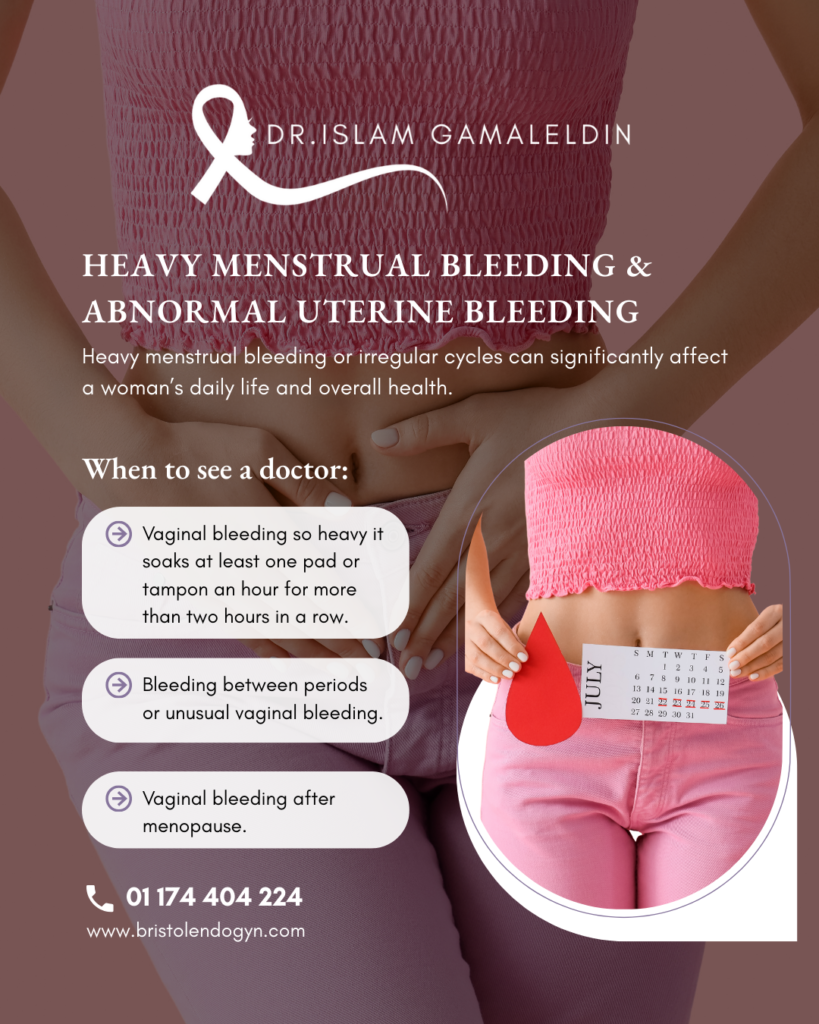
Heavy menstrual bleeding (HMB) and abnormal uterine bleeding (AUB) are common gynaecological concerns that can significantly impact a woman’s physical health, emotional wellbeing, and daily life. While variations in menstrual cycles can be normal, persistent or severe symptoms should never be ignored. Understanding when bleeding is not normal is the first step toward effective treatment and improved quality of life.
What Is Considered Normal Menstrual Bleeding?
A normal menstrual cycle typically:
- Occurs every 21–35 days
- Lasts 4–7 days
- Involves manageable blood loss without disrupting daily activities
Any bleeding that falls outside these parameters may be classified as abnormal uterine bleeding.
Signs of Heavy or Abnormal Uterine Bleeding
You should seek medical advice if you experience:
- Periods lasting longer than 7 days
- Very heavy flow, requiring frequent pad or tampon changes
- Passing large blood clots
- Bleeding between periods or after menopause
- Irregular or unpredictable cycles
- Symptoms of anaemia, such as fatigue, dizziness, or shortness of breath
These symptoms are not something you should “just live with”.
Common Causes of Heavy Menstrual Bleeding
Heavy or abnormal uterine bleeding can have many causes, including:
- Hormonal imbalances
- Uterine fibroids or polyps
- Adenomyosis
- Endometriosis
- Bleeding disorders
- Perimenopause
- Rarely, precancerous or cancerous conditions
A proper diagnosis is essential to determine the most appropriate treatment.
When Should You See a Specialist?
You should consult a gynaecologist if heavy or irregular bleeding:
- Interferes with your work, social life, or sleep
- Causes ongoing pain or exhaustion
- Does not improve with first-line treatments
- Develops suddenly or worsens over time
Early medical evaluation allows for less invasive and more effective treatment options.
Diagnosis and Treatment Options
At Bristol Endogyn, assessment may include:
- Detailed medical history and examination
- Ultrasound or advanced imaging
- Blood tests
- Hysteroscopy or biopsy, if required
Treatment is tailored to your needs and may include:
- Hormonal therapies
- Non-hormonal medications
- Minimally invasive procedures
- Surgical options when necessary
The goal is always to restore normal bleeding patterns, relieve symptoms, and improve quality of life.
You Don’t Have to Suffer in Silence
Heavy menstrual bleeding and abnormal uterine bleeding are medical conditions, not inconveniences. With the right care, most women experience significant improvement or complete resolution of symptoms.
📍 Spire Bristol Hospital, The Glen, Redland Hill, Redland, Bristol BS6 6UT, UK
📞 01 174 404 224
🌐 www.bristolendogyn.com