
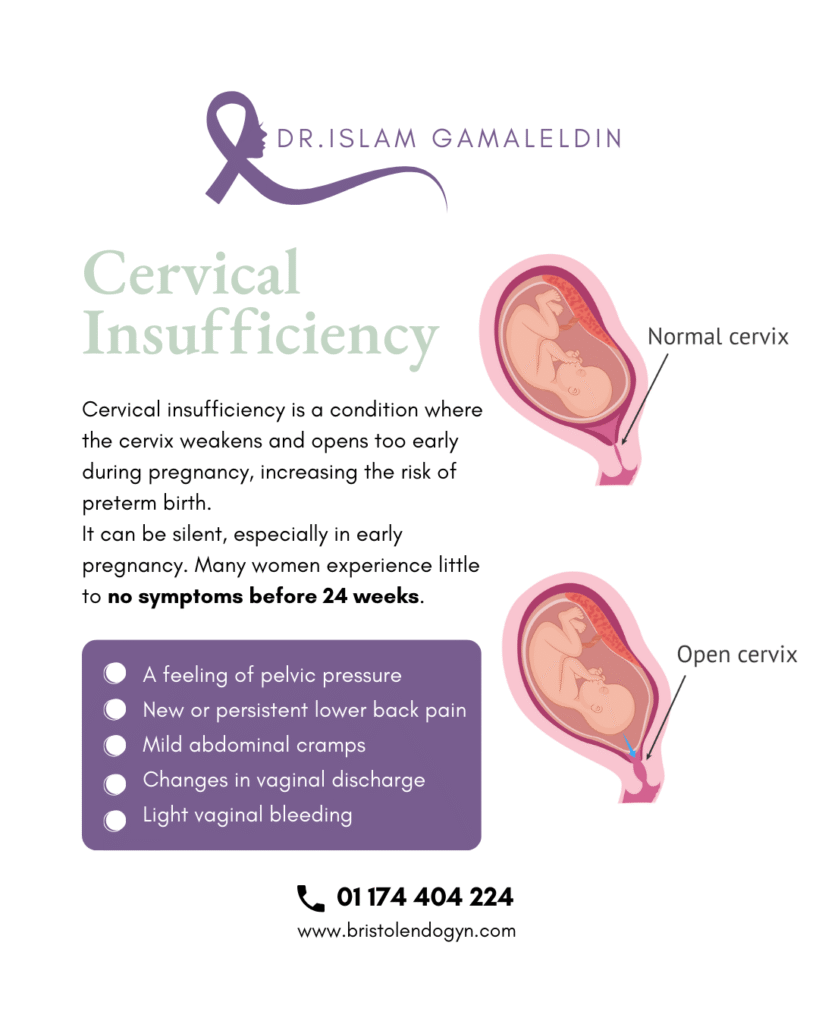
Cervical Insufficiency

Dec 30, 2025

Cervical insufficiency, also known as an incompetent cervix, is a condition in which the cervix begins to weaken, shorten, or open too early during pregnancy. This premature opening can significantly increase the risk of miscarriage or preterm birth, particularly during the second trimester.

Because the condition is often silent, early awareness and proper medical follow-up are essential for protecting both maternal and fetal health.

What Is Cervical Insufficiency?

During a healthy pregnancy, the cervix remains firm, long, and closed until late in the third trimester. In cases of cervical insufficiency, the cervix is unable to maintain its structural strength and may begin to open without contractions or pain.

This can lead to pregnancy loss or premature delivery if not identified and managed in time.


Why Is Cervical Insufficiency Challenging?

One of the main difficulties with cervical insufficiency is that it often presents with few or no symptoms, especially early in pregnancy. Many women are unaware of the condition until complications occur, typically before 24 weeks of gestation.

This is why regular prenatal care and appropriate screening for at-risk patients are critical.


Symptoms to Watch For

Although symptoms may be mild or absent, some warning signs can include:

  • A feeling of pelvic pressure
  • New or persistent lower back pain
  • Mild abdominal or menstrual-like cramps
  • Changes in vaginal discharge (increase, watery or mucus-like)
  • Light vaginal bleeding or spotting

If any of these symptoms occur, it is important to seek medical advice promptly.


Who Is at Higher Risk?

Cervical insufficiency may be more likely in women who have:

  • A history of second-trimester pregnancy loss
  • Previous preterm birth
  • Prior cervical surgery (such as LEEP or cone biopsy)
  • Congenital uterine or cervical abnormalities

A detailed medical history and ultrasound monitoring can help identify those at higher risk.


Diagnosis and Management

Diagnosis is often made through transvaginal ultrasound, which measures cervical length during pregnancy. If cervical shortening or opening is detected early, several management options may be considered, including:

  • Close ultrasound surveillance
  • Progesterone therapy
  • Cervical cerclage (a surgical procedure to reinforce the cervix)

The appropriate treatment depends on individual risk factors and pregnancy history.


The Importance of Early Detection

Early diagnosis and personalized care can significantly improve pregnancy outcomes. If cervical insufficiency is suspected or identified early, proactive management can help prolong pregnancy and reduce the risk of preterm birth.


When to Seek Specialist Care

If you have risk factors, previous pregnancy complications, or concerning symptoms, consulting a specialist in gynecology or high-risk pregnancy is strongly recommended.

📞 01 174 404 224
🌐 www.bristolendogyn.com
📍 Spire Bristol Hospital, The Glen, Redland Hill, Redland, Bristol BS6 6UT, United Kingdom

Uterine Fibroids: Surgery Isn’t the Only Option

Uterine fibroids are noncancerous growths in the uterus that affect many women during their reproductive years. While surgery is often seen as the primary solution, it isn’t the only option. Understanding alternative treatments can help manage symptoms and improve...

Understanding the Difference Between Adenomyosis & Endometriosis

Adenomyosis and endometriosis are two gynecological conditions that often get confused due to their overlapping symptoms. Both affect the uterus and can cause pelvic pain, heavy menstrual bleeding, and discomfort, but they are distinct in how they develop and how they...

How exercise can help you live better with endometriosis ?

Endometriosis is a chronic condition that affects around one in ten women during their reproductive years. Characterised by the presence of tissue similar to the uterine lining growing outside the uterus, it can lead to persistent pelvic pain, debilitating fatigue,...

Is It Just a Painful Period… or Something More?

Many women assume painful periods are normal. But sometimes, they may signal endometriosis, a chronic condition where tissue similar to the uterine lining grows outside the uterus. Ignoring the signs can delay diagnosis and affect fertility, health, and quality of...

Can You Get Pregnant with Endometriosis?

Endometriosis is a gynecological condition affecting around 10% of women of reproductive age. It occurs when tissue similar to the uterine lining grows outside the uterus, causing pain, heavy periods, and sometimes infertility. But is it possible to get pregnant while...

5 Signs of Endometriosis You Should Never Ignore

Endometriosis is a complex and often silent condition that affects nearly one in ten women. Yet many go years—sometimes more than a decade—without receiving the correct diagnosis. Symptoms are frequently normalised, dismissed, or mistaken for “typical” menstrual pain....

Specialist in Women’s Health, Endometriosis & Advanced Minimally Invasive Surgery

Women’s health requires a comprehensive, personalized approach, especially when it comes to complex conditions like endometriosis. With the latest advancements in minimally invasive surgery, specialists are able to offer treatments that are precise, effective, and...

Endometriosis & Advanced Minimally Invasive Surgery: A New Era of Care

Endometriosis is a long-term, often debilitating condition in which tissue similar to the lining of the womb grows outside the uterus. For many women, it causes chronic pelvic pain, heavy periods, ovarian cysts, and sometimes difficulties with fertility. Because...

Understanding Endometriosis: Symptoms, Diagnosis, and Treatment Options.

Introduction:Endometriosis affects millions of women worldwide, yet it remains one of the most misunderstood gynaecological conditions. In this article, we will explore what endometriosis is, how it is diagnosed, and the latest treatment options that can help women...