

Diaphragmatic endometriosis is a rare form of endometriosis that affects the diaphragm — the muscle that separates the chest from the abdomen and plays a key role in breathing. Because symptoms often mimic other conditions, diagnosis can be delayed. Early recognition and specialized care are essential to prevent complications and improve quality of life.
What Is Diaphragmatic Endometriosis?
Endometriosis occurs when tissue similar to the lining of the uterus grows outside the uterus. In diaphragmatic endometriosis, these lesions develop on or within the diaphragm.
Although most endometriosis lesions are found in the pelvis, extrapelvic forms — including diaphragmatic involvement — can occur. This form is uncommon but may be associated with severe or deep infiltrating endometriosis.
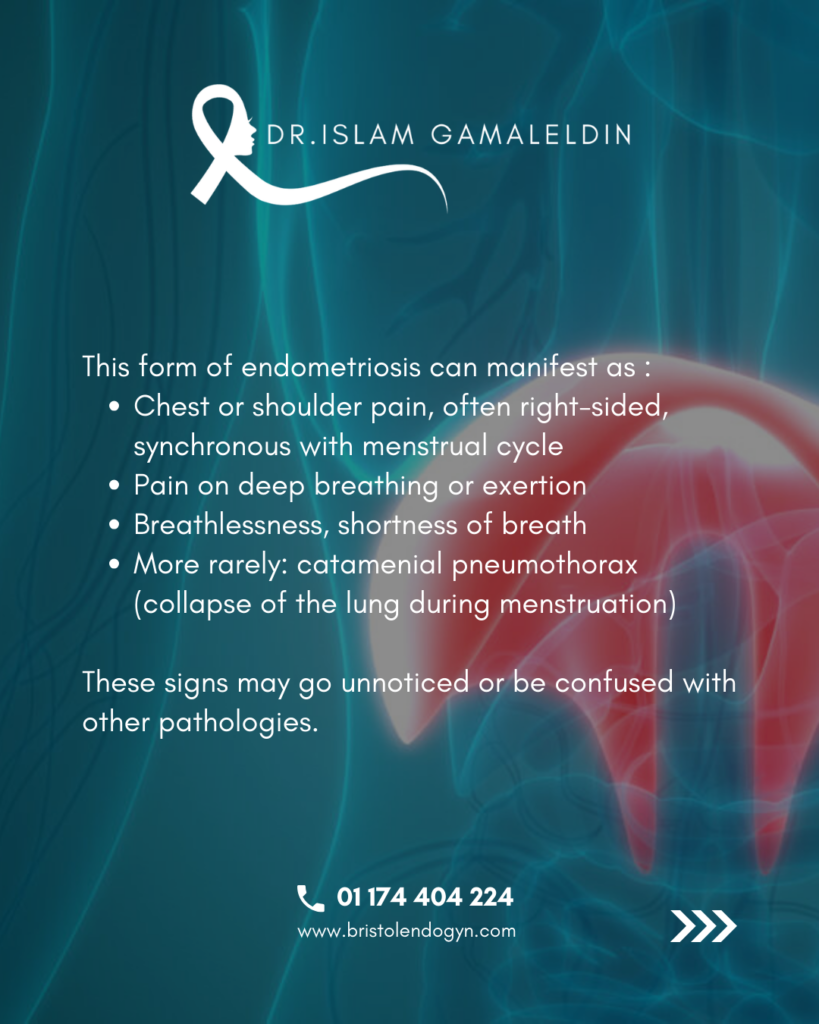
Symptoms of Diaphragmatic Endometriosis
Symptoms are often cyclical, meaning they occur or worsen during menstruation. The most common signs include:
- Chest pain, often right-sided, during periods
- Shoulder pain linked to the menstrual cycle
- Pain when breathing deeply (pleuritic pain)
- Shortness of breath
- Pain during physical exertion
- In rare cases: catamenial pneumothorax (lung collapse during menstruation)
Because these symptoms can resemble respiratory or musculoskeletal conditions, they are frequently misdiagnosed or overlooked.
Why Diagnosis Can Be Challenging
Diaphragmatic endometriosis is often underdiagnosed due to:
- Non-specific respiratory symptoms
- Lack of awareness of thoracic endometriosis
- Normal findings on standard imaging
- Symptoms being attributed to anxiety, asthma, or muscular pain
A thorough clinical evaluation by an endometriosis specialist is essential.
How Is Diaphragmatic Endometriosis Diagnosed?
Accurate diagnosis relies on a combination of symptom analysis and specialized imaging:
1. Detailed Clinical Assessment
A careful review of cyclical chest or shoulder pain is crucial.
2. Specialized Imaging
- Pelvic and upper abdominal MRI with focus on the diaphragm
- Chest CT scan if thoracic involvement is suspected
- Targeted ultrasound in selected cases
3. Multidisciplinary Evaluation
Collaboration with a pulmonologist or thoracic surgeon may be necessary when lung or pleural involvement is suspected.
A comprehensive assessment helps determine lesion location, depth, and surgical strategy.
Surgical Treatment of Diaphragmatic Endometriosis
When symptoms are significant or complications occur, surgery is often recommended.
Minimally Invasive Laparoscopic Surgery
The procedure is usually performed by laparoscopy under general anesthesia. The goals are to:
- Remove visible diaphragmatic lesions
- Preserve respiratory function
- Minimize the risk of recurrence
- Prevent complications such as pneumothorax
Depending on lesion depth and thoracic extension, a thoracic surgeon may be part of the surgical team to ensure complete and safe treatment.
Why a Multidisciplinary Approach Matters
Diaphragmatic endometriosis requires expertise in both pelvic and thoracic surgery. A coordinated, multidisciplinary approach ensures:
- Accurate diagnosis
- Comprehensive lesion removal
- Optimal pain relief
- Reduced recurrence risk
Choosing a specialized center experienced in complex endometriosis is key to achieving the best outcomes.
When to Seek Medical Advice
If you experience cyclical chest pain, shoulder pain during your period, or unexplained shortness of breath linked to menstruation, consult a specialist in endometriosis. Early diagnosis can significantly improve treatment success and quality of life.