
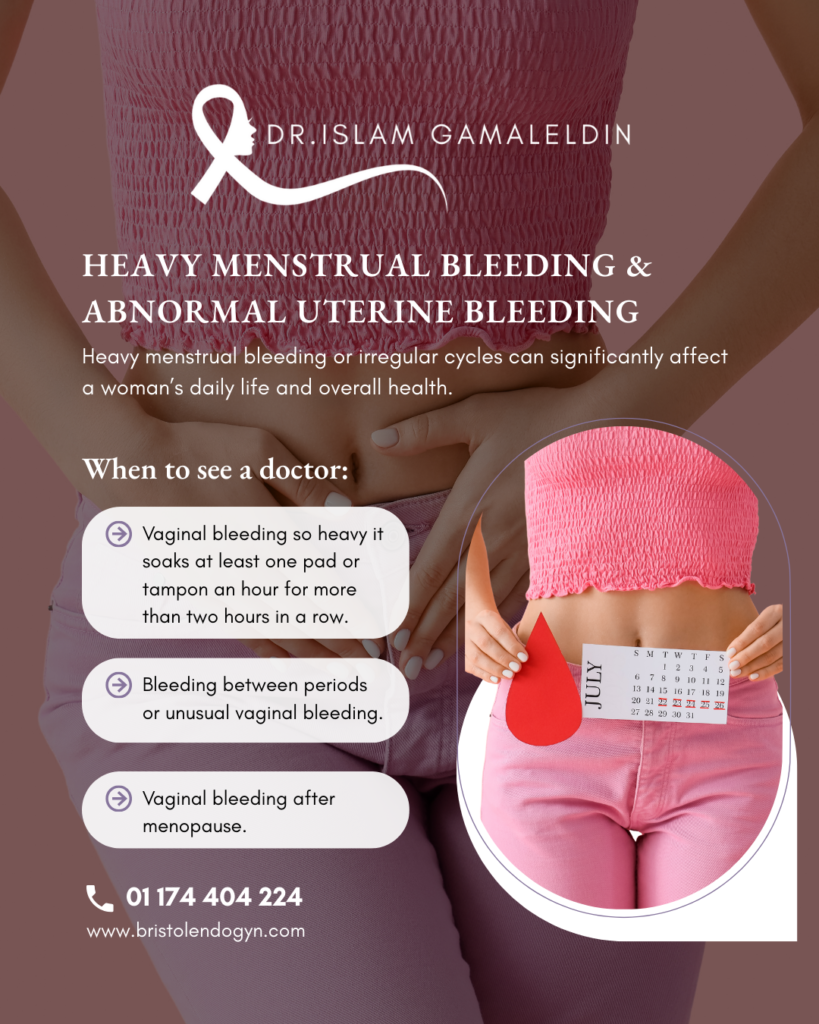
Heavy Menstrual Bleeding & Abnormal Uterine Bleeding: When Is It Not Normal?

Jan 30, 2026

Heavy menstrual bleeding (HMB) and abnormal uterine bleeding (AUB) are common gynaecological concerns that can significantly impact a woman’s physical health, emotional wellbeing, and daily life. While variations in menstrual cycles can be normal, persistent or severe symptoms should never be ignored. Understanding when bleeding is not normal is the first step toward effective treatment and improved quality of life.


What Is Considered Normal Menstrual Bleeding?

A normal menstrual cycle typically:

  • Occurs every 21–35 days
  • Lasts 4–7 days
  • Involves manageable blood loss without disrupting daily activities

Any bleeding that falls outside these parameters may be classified as abnormal uterine bleeding.


Signs of Heavy or Abnormal Uterine Bleeding

You should seek medical advice if you experience:

  • Periods lasting longer than 7 days
  • Very heavy flow, requiring frequent pad or tampon changes
  • Passing large blood clots
  • Bleeding between periods or after menopause
  • Irregular or unpredictable cycles
  • Symptoms of anaemia, such as fatigue, dizziness, or shortness of breath

These symptoms are not something you should “just live with”.


Common Causes of Heavy Menstrual Bleeding

Heavy or abnormal uterine bleeding can have many causes, including:

  • Hormonal imbalances
  • Uterine fibroids or polyps
  • Adenomyosis
  • Endometriosis
  • Bleeding disorders
  • Perimenopause
  • Rarely, precancerous or cancerous conditions

A proper diagnosis is essential to determine the most appropriate treatment.


When Should You See a Specialist?

You should consult a gynaecologist if heavy or irregular bleeding:

  • Interferes with your work, social life, or sleep
  • Causes ongoing pain or exhaustion
  • Does not improve with first-line treatments
  • Develops suddenly or worsens over time

Early medical evaluation allows for less invasive and more effective treatment options.


Diagnosis and Treatment Options

At Bristol Endogyn, assessment may include:

  • Detailed medical history and examination
  • Ultrasound or advanced imaging
  • Blood tests
  • Hysteroscopy or biopsy, if required

Treatment is tailored to your needs and may include:

  • Hormonal therapies
  • Non-hormonal medications
  • Minimally invasive procedures
  • Surgical options when necessary

The goal is always to restore normal bleeding patterns, relieve symptoms, and improve quality of life.


You Don’t Have to Suffer in Silence

Heavy menstrual bleeding and abnormal uterine bleeding are medical conditions, not inconveniences. With the right care, most women experience significant improvement or complete resolution of symptoms.

📍 Spire Bristol Hospital, The Glen, Redland Hill, Redland, Bristol BS6 6UT, UK
📞 01 174 404 224
🌐 www.bristolendogyn.com


Dr. Islam Gamaleldin – Expert, Compassionate Care

I am a Consultant Gynaecologist and Co-Lead at the BSGE-accredited Endometriosis Centre at Southmead Hospital. With over 15 years of experience in advanced laparoscopic and robotic surgery, I provide specialist care for women with complex endometriosis and benign...

Endometriosis Specialist in Bristol – Advanced Minimally Invasive Care

Living with endometriosis can be physically and emotionally exhausting. As an endometriosis specialist in Bristol, I provide personalised, precise and minimally invasive treatment tailored to each patient’s needs. With over 15 years of experience in advanced...

Advanced Minimally Invasive Gynaecological Surgery

Advances in minimally invasive and robotic gynaecological surgery have significantly improved outcomes for women with complex pelvic conditions. These techniques allow for greater surgical precision, reduced pain, faster recovery, and a quicker return to daily life,...

Ovarian Cysts: Symptoms, Causes, and When to Seek Medical Advice

Ovarian cysts are fluid-filled sacs that develop in or on an ovary. They are very common and, in most cases, harmless, often resolving on their own without treatment. However, some ovarian cysts can cause discomfort or complications and should be properly assessed by...

Uterine Fibroids: Surgery Isn’t the Only Option

Uterine fibroids are noncancerous growths in the uterus that affect many women during their reproductive years. While surgery is often seen as the primary solution, it isn’t the only option. Understanding alternative treatments can help manage symptoms and improve...

Understanding the Difference Between Adenomyosis & Endometriosis

Adenomyosis and endometriosis are two gynecological conditions that often get confused due to their overlapping symptoms. Both affect the uterus and can cause pelvic pain, heavy menstrual bleeding, and discomfort, but they are distinct in how they develop and how they...

Cervical Insufficiency

Cervical insufficiency, also known as an incompetent cervix, is a condition in which the cervix begins to weaken, shorten, or open too early during pregnancy. This premature opening can significantly increase the risk of miscarriage or preterm birth, particularly...

How exercise can help you live better with endometriosis ?

Endometriosis is a chronic condition that affects around one in ten women during their reproductive years. Characterised by the presence of tissue similar to the uterine lining growing outside the uterus, it can lead to persistent pelvic pain, debilitating fatigue,...

Is It Just a Painful Period… or Something More?

Many women assume painful periods are normal. But sometimes, they may signal endometriosis, a chronic condition where tissue similar to the uterine lining grows outside the uterus. Ignoring the signs can delay diagnosis and affect fertility, health, and quality of...

Can You Get Pregnant with Endometriosis?

Endometriosis is a gynecological condition affecting around 10% of women of reproductive age. It occurs when tissue similar to the uterine lining grows outside the uterus, causing pain, heavy periods, and sometimes infertility. But is it possible to get pregnant while...