
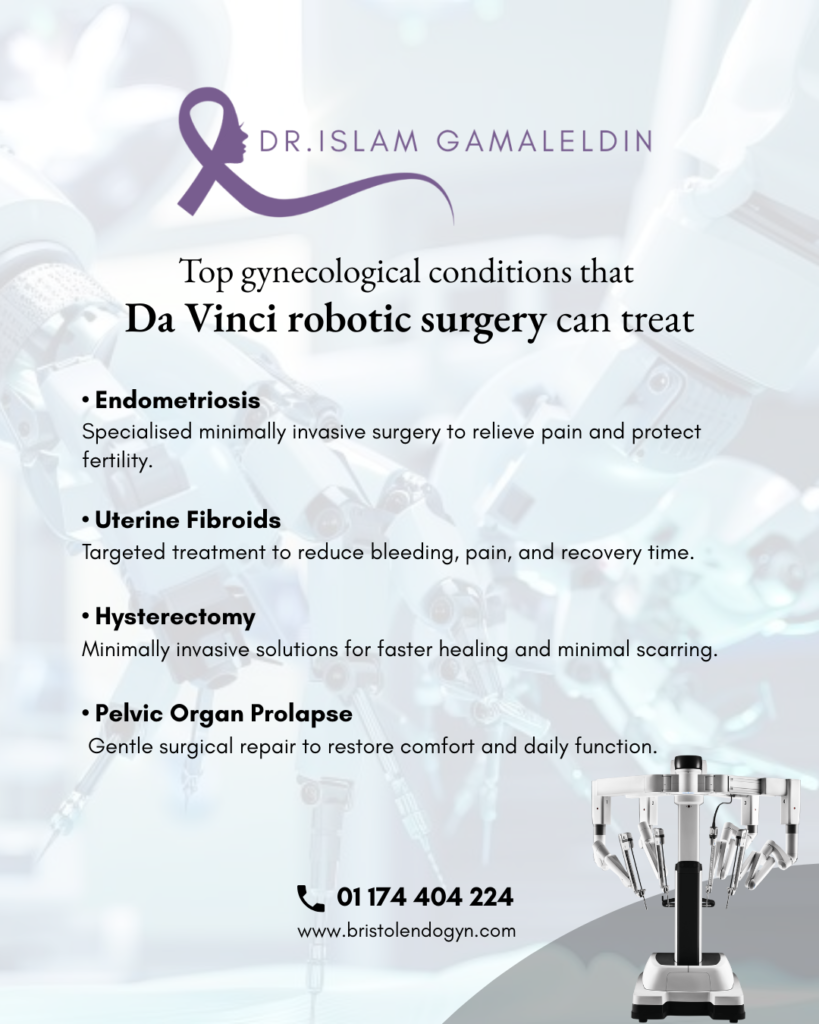
Advances in minimally invasive and robotic gynaecological surgery have significantly improved outcomes for women with complex pelvic conditions. These techniques allow for greater surgical precision, reduced pain, faster recovery, and a quicker return to daily life, while prioritising long-term health and wellbeing.
Below are some of the key conditions commonly managed through advanced minimally invasive approaches.
Endometriosis
Endometriosis is a chronic condition in which tissue similar to the uterine lining grows outside the uterus. It can cause severe pelvic pain, heavy and painful periods, pain during intercourse, and fertility challenges.
When surgery is indicated, precise laparoscopic or robotic excision allows for thorough removal of endometriotic disease, including lesions located in difficult-to-reach areas, while preserving healthy tissue. A minimally invasive approach is associated with less post-operative pain, minimal scarring, and faster recovery compared to traditional open surgery.
Uterine Fibroids
Uterine fibroids are common, non-cancerous growths that may cause heavy menstrual bleeding, pelvic pain, pressure symptoms, and fertility concerns. While not all fibroids require treatment, surgery may be recommended when symptoms significantly affect quality of life.
Minimally invasive myomectomy enables targeted removal of fibroids while preserving the uterus. This approach reduces blood loss, shortens hospital stay, and supports quicker recovery.
Hysterectomy
A hysterectomy involves the surgical removal of the uterus and may be recommended for conditions such as chronic pelvic pain, fibroids, abnormal uterine bleeding, or gynaecological malignancy.
Using minimally invasive and robotic techniques, hysterectomy can be performed through small incisions, offering greater surgical control, fewer complications, reduced pain, and faster recovery, with minimal visible scarring.
Pelvic Organ Prolapse
Pelvic organ prolapse occurs when weakened pelvic floor support allows organs such as the bladder, uterus, or rectum to descend into the vaginal canal. Symptoms may include discomfort, urinary or bowel difficulties, and reduced quality of life.
When conservative treatments are insufficient, minimally invasive surgical repair can restore pelvic anatomy and function. Advanced techniques allow precise support of the affected organs while minimising surgical trauma and recovery time.
Personalised, Fertility-Focused Care
Every woman’s condition and goals are unique. Treatment plans are tailored to provide effective symptom relief while preserving fertility and pelvic function whenever possible. A patient-centred approach ensures care is delivered with precision, compassion, and long-term wellbeing in mind.
If you are experiencing pelvic pain, heavy bleeding, or symptoms affecting your daily life, specialist assessment can help determine the most appropriate treatment options.