
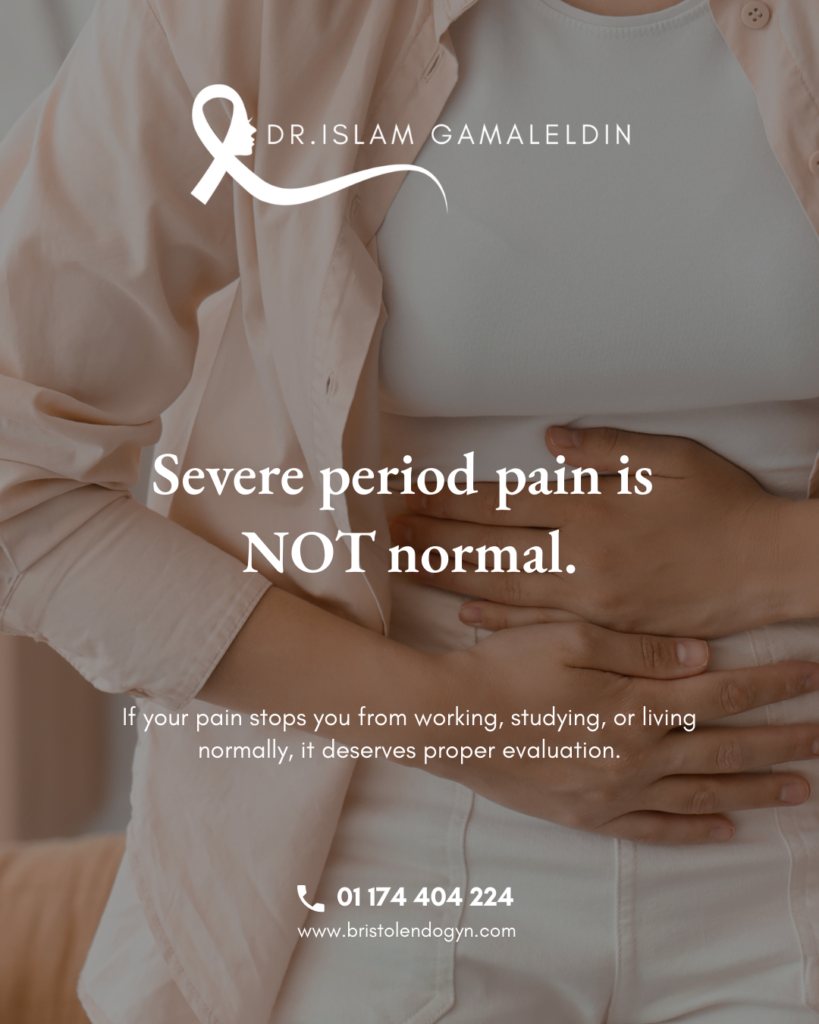
Many women are told that severe period pain is “just part of being a woman.”
It isn’t.
While mild menstrual discomfort can be common, severe period pain that disrupts work, study, sleep, or daily life is not normal. In many cases, persistent and debilitating menstrual pain may be a sign of endometriosis.
Early specialist assessment can significantly improve quality of life and help protect fertility.
What Is Severe Period Pain?
Severe period pain (also known as secondary dysmenorrhoea) goes beyond typical cramping. It may include:
- Pain that prevents normal daily activities
- Pain not relieved by standard painkillers
- Pain lasting several days before or during menstruation
- Associated nausea, fatigue, or fainting
- Pain spreading to the back, legs, or rectum
If severe period pain occurs every month or worsens over time, it warrants further investigation.
Could Severe Period Pain Be Endometriosis?
Endometriosis affects approximately 1 in 10 women of reproductive age.
It occurs when tissue similar to the lining of the womb grows outside the uterus — commonly affecting the ovaries, fallopian tubes, bowel, bladder, or pelvic ligaments. In more complex cases, it can involve the diaphragm or chest cavity.
Symptoms of endometriosis may include:
- Severe period pain
- Chronic pelvic pain
- Pain during intercourse
- Bowel or bladder pain during menstruation
- Fertility difficulties
The severity of pain does not always reflect the stage of disease. Even early-stage endometriosis can cause significant symptoms.
Why Is Endometriosis Often Diagnosed Late?
The average delay in diagnosing endometriosis is 7–8 years.
Common reasons include:
- Normalisation of severe period pain
- Symptoms being dismissed
- Lack of early referral to a specialist
- Disease not detected without expert ultrasound or MRI
Delayed diagnosis may lead to disease progression, chronic pain, and potential fertility impact.
Early specialist evaluation is essential.
Severe Period Pain and Fertility
Up to 30–50% of women with endometriosis may experience fertility challenges.
Endometriosis can affect fertility by:
- Causing inflammation in the pelvis
- Forming ovarian cysts (endometriomas)
- Distorting pelvic anatomy
- Creating scar tissue affecting the fallopian tubes
Timely diagnosis allows for personalised, fertility-preserving management strategies.
The Importance of Specialist Assessment in Bristol
Not all pelvic pain is the same. Severe period pain requires careful evaluation, detailed imaging, and an individualised treatment plan.
Specialist care may include:
- Advanced pelvic ultrasound
- MRI mapping of disease
- Medical management
- Minimally invasive laparoscopic surgery
- Robotic-assisted surgery for complex cases
- Multidisciplinary collaboration when required
Minimally invasive and robotic techniques are designed to reduce pain, improve recovery, and preserve reproductive health wherever possible.
When Should You Seek Help for Severe Period Pain?
You should seek specialist advice if:
- Your period pain stops you from working or studying
- You regularly require strong pain medication
- You experience pain during intercourse
- You have bowel or bladder symptoms during menstruation
- You are struggling to conceive
Severe period pain is not something you should simply tolerate.
You Are Not Alone — Effective Treatment Is Available
Endometriosis and other causes of severe period pain are common — but living in pain should not be.
Early diagnosis, expert imaging, and minimally invasive treatment options can significantly improve long-term outcomes and quality of life.
If you are experiencing severe period pain in Bristol or the surrounding areas, specialist assessment can provide clarity, reassurance, and a personalised treatment plan.
📍 Spire Bristol Hospital, The Glen, Redland Hill, Bristol BS6 6UT, United Kingdom
📞 0117 404 224