
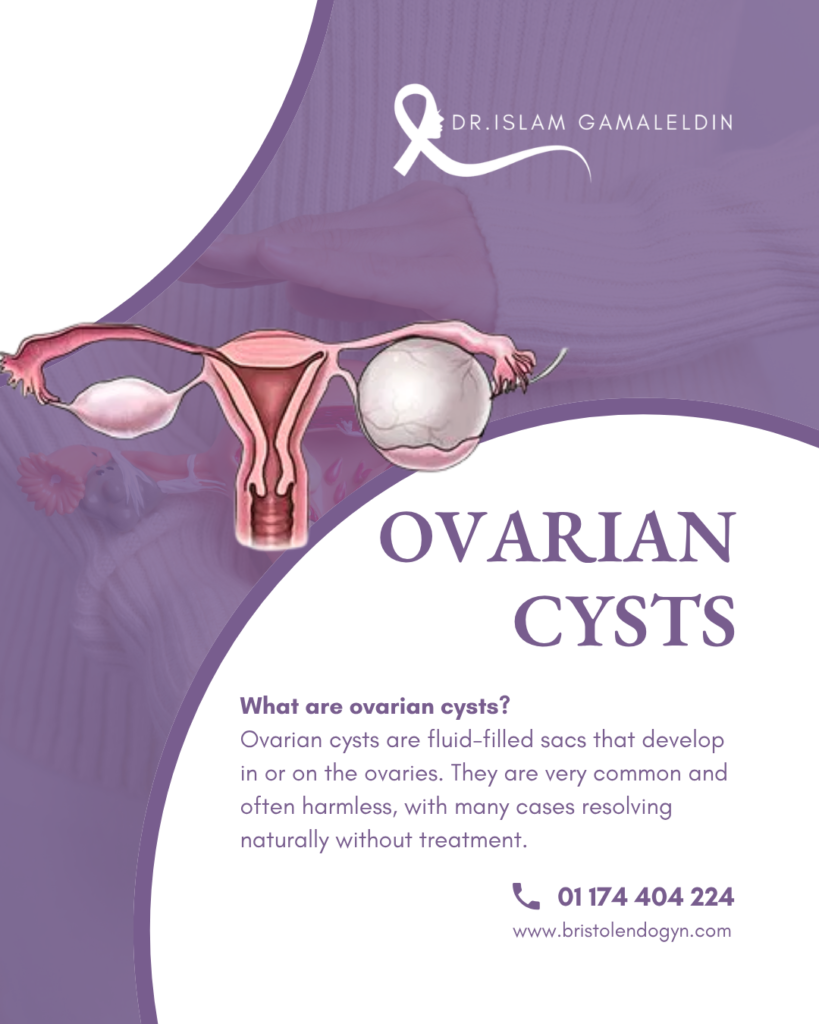
Ovarian cysts are more common than many women realize. In most cases, they are harmless and resolve on their own without treatment. However, understanding what they are and recognizing potential symptoms is essential for maintaining good reproductive health.
What Are Ovarian Cysts?
Ovarian cysts are fluid-filled sacs that develop in or on the ovaries. They can vary in size and type, and most women will experience at least one cyst during their lifetime without even knowing it.
In many cases, ovarian cysts are part of the normal menstrual cycle and disappear naturally within a few weeks or months.
Common Causes of Ovarian Cysts
Ovarian cysts can develop for several reasons, including:
- Hormonal changes
- Ovulation (functional cysts)
- Endometriosis
- Pregnancy
- Severe pelvic infections
Functional cysts are the most common type and are usually harmless.
Symptoms of Ovarian Cysts
Most ovarian cysts do not cause symptoms. However, when symptoms occur, they may include:
- Pelvic pain (dull or sharp)
- Bloating or abdominal swelling
- Pain during intercourse
- Irregular menstrual cycles
- Frequent need to urinate
If a cyst becomes large, ruptures, or causes ovarian torsion, symptoms can become severe and require urgent medical attention.
When Should You See a Doctor?
You should seek medical advice if you experience:
- Sudden, severe abdominal or pelvic pain
- Pain accompanied by fever or vomiting
- Persistent bloating or discomfort
- Changes in your menstrual cycle
Early diagnosis helps prevent complications and ensures proper care.
Diagnosis and Treatment
Ovarian cysts are typically diagnosed through:
- Pelvic examination
- Ultrasound imaging
- Blood tests (in some cases)
Treatment Options
Treatment depends on the type and size of the cyst, as well as your symptoms:
- Watchful waiting (most common)
- Medication (to regulate hormones)
- Surgical removal (for large or persistent cysts)
How to Protect Your Reproductive Health
Maintaining regular gynecological check-ups is key to early detection and peace of mind. Listening to your body and reporting unusual symptoms can make a significant difference.
Book an Appointment
If you are experiencing symptoms or have concerns about ovarian cysts, don’t hesitate to seek professional advice.
📞 01 174 404 224
🌐 www.bristolendogyn.com
📍 Spire Bristol Hospital, The Glen, Redland Hill, Redland, Bristol BS6 6UT, United Kingdom