
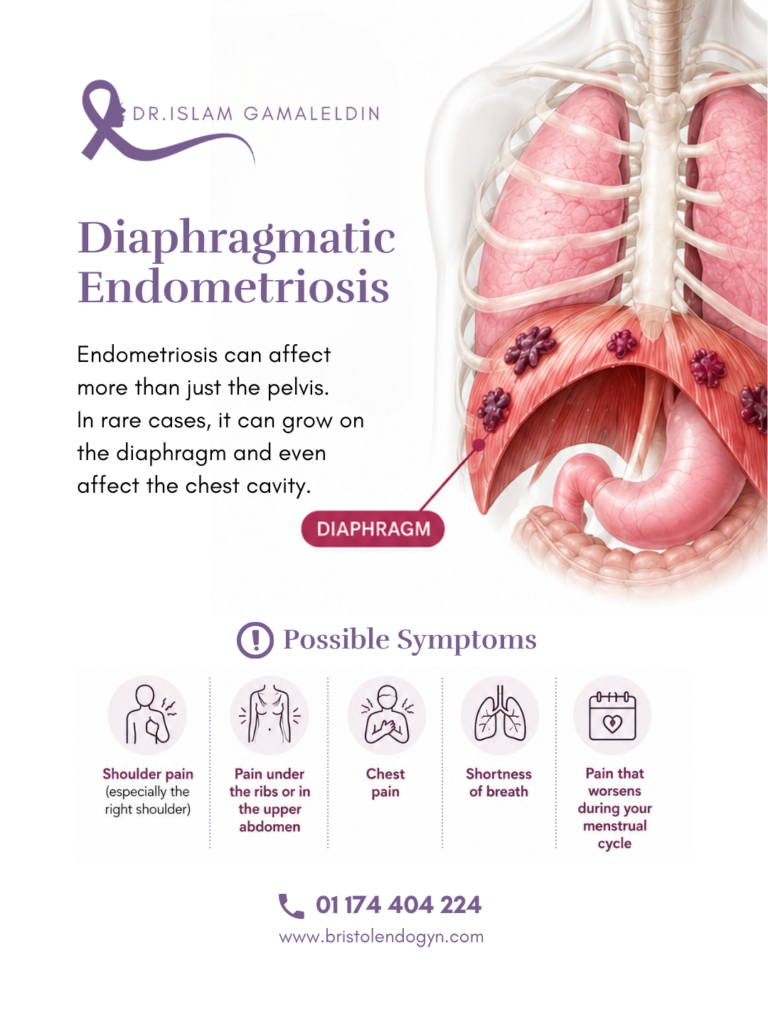
Endometriosis is commonly associated with pelvic pain, but it can also affect areas outside the pelvis. One of the rarest forms is diaphragmatic endometriosis, where endometrial-like tissue grows on or within the diaphragm—the muscle that separates the chest from the abdomen.
Although uncommon, recognising the symptoms early can help prevent years of delayed diagnosis and improve quality of life.
What Is Diaphragmatic Endometriosis?
Diaphragmatic endometriosis occurs when endometrial-like tissue develops on the diaphragm. This condition often affects the right side of the diaphragm and may occur alongside pelvic endometriosis.
Because its symptoms are often mistaken for lung, muscle, or digestive problems, many women remain undiagnosed for years.
Symptoms of Diaphragmatic Endometriosis
Symptoms typically worsen around the time of your menstrual period and may include:
- Shoulder pain (especially the right shoulder)
- Pain beneath the ribs or in the upper abdomen
- Chest pain
- Shortness of breath
- Pain that worsens during your menstrual cycle
Not every woman experiences all of these symptoms, and some may have diaphragmatic endometriosis without significant discomfort.
How Is Diaphragmatic Endometriosis Diagnosed?
Diagnosing diaphragmatic endometriosis can be challenging because imaging tests may not always detect the lesions.
Diagnosis usually involves:
- A detailed medical history
- Assessment of cyclical symptoms
- MRI in selected cases
- Laparoscopic surgery when clinically indicated
An experienced endometriosis specialist is essential to identify this condition accurately.
Treatment Options
Treatment depends on the severity of symptoms, the extent of the disease, and your future fertility plans.
Options may include:
- Hormonal therapy to manage symptoms
- Pain management strategies
- Advanced laparoscopic surgery to remove endometriosis lesions when appropriate
Complex cases often require a multidisciplinary approach involving gynaecologists, colorectal surgeons, thoracic surgeons, radiologists, and pain specialists.
When Should You See a Specialist?
If you experience shoulder pain, chest discomfort, or upper abdominal pain that becomes worse during your menstrual cycle, it is important to seek medical advice.
These symptoms should not be ignored, particularly if you have already been diagnosed with pelvic endometriosis.
Early diagnosis can lead to more effective treatment and a better quality of life.
Frequently Asked Questions
Can endometriosis affect the diaphragm?
Yes. Although uncommon, endometriosis can develop on the diaphragm and cause chest, shoulder, or upper abdominal pain, particularly during menstruation.
Is diaphragmatic endometriosis serious?
It can significantly affect daily life and should be assessed by an experienced endometriosis specialist. Early diagnosis allows appropriate treatment and symptom management.
Can diaphragmatic endometriosis be treated?
Yes. Depending on the individual case, treatment may include medication or advanced minimally invasive surgery.
Book a Consultation
If you are experiencing symptoms that may be related to diaphragmatic endometriosis, expert assessment is the first step towards an accurate diagnosis and personalised treatment.
Dr. Islam Gamaleldin
Specialist in Women’s Health, Endometriosis & Advanced Minimally Invasive Surgery
📞 01 174 404 224
🌐 www.bristolendogyn.com
📍 Spire Bristol Hospital
The Glen, Redland Hill, Redland, Bristol BS6 6UT, United Kingdom