
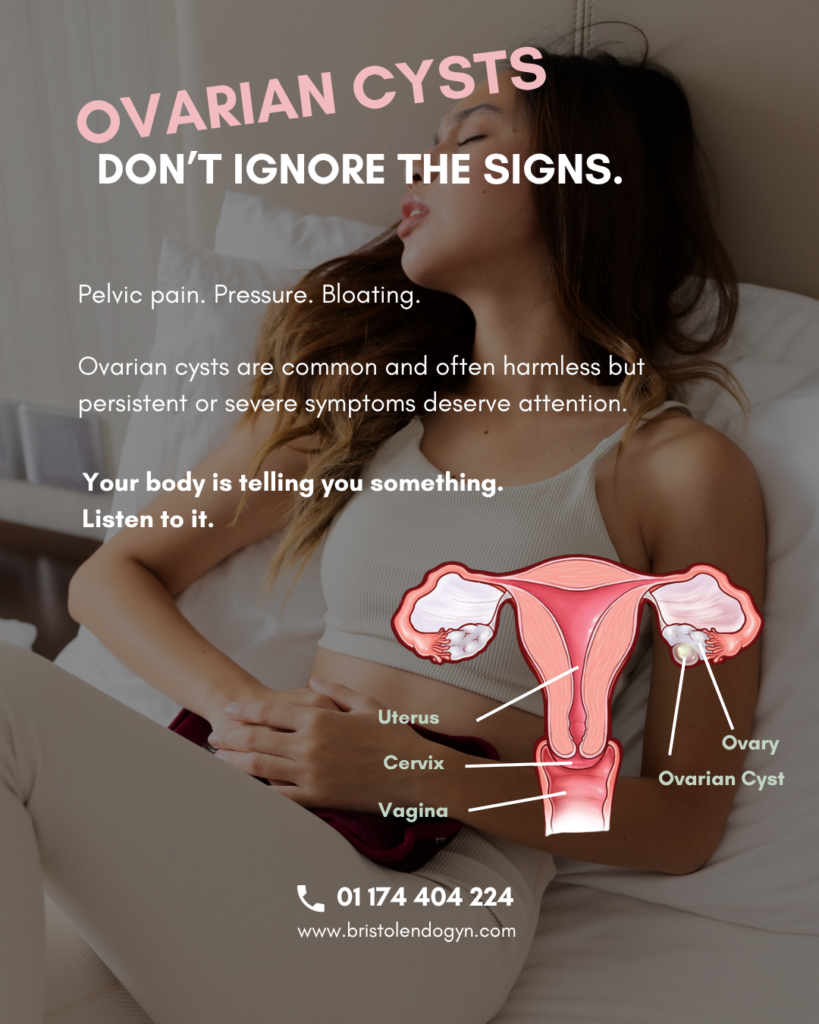
Ovarian cysts are very common and, in many cases, cause no symptoms and disappear without treatment. However, some cysts can become large, rupture, twist or cause persistent symptoms.
Understanding ovarian cyst symptoms and recognising the warning signs can help you know when it may be appropriate to seek medical advice.
Pelvic pain, pressure and bloating should not simply be ignored when they are persistent, severe or unusual for you.
What Is an Ovarian Cyst?
An ovarian cyst is a fluid-filled sac that develops on or within an ovary.
Many ovarian cysts are related to the normal menstrual cycle and are known as functional cysts. These are usually benign and may resolve naturally over time.
However, there are different types of ovarian cysts, and their significance can depend on factors including their size, appearance, symptoms and whether you are pre- or postmenopausal.
What Are the Most Common Ovarian Cyst Symptoms?
Many ovarian cysts do not cause any noticeable symptoms. When symptoms do occur, they may include:
- Pelvic pain, which may be dull or sharp
- Pain that is more noticeable on one side
- A feeling of pressure or heaviness in the lower abdomen
- Abdominal bloating or swelling
- Discomfort during certain activities
- Changes in menstrual symptoms in some cases
These symptoms can also be caused by other gynaecological or non-gynaecological conditions. Therefore, symptoms alone cannot confirm that an ovarian cyst is the cause.
What Does Ovarian Cyst Pain Feel Like?
The experience of ovarian cyst pain can vary considerably.
Some women experience a dull ache or sensation of pressure in the pelvis, while others may develop sharper pain. The discomfort may be more noticeable on the side of the affected ovary.
The intensity of pain does not necessarily indicate the type or severity of a cyst, which is why persistent or worsening symptoms should be medically assessed.
When Should You Seek Urgent Medical Attention?
Most ovarian cysts are not medical emergencies. However, sudden and severe pelvic or abdominal pain requires prompt medical attention, particularly when accompanied by other concerning symptoms.
🚨 Seek urgent medical help if you experience:
- Sudden, severe pelvic or abdominal pain
- Severe pain with fever
- Pain accompanied by vomiting
- Dizziness or significant weakness
- Fainting or feeling as though you may faint
- Cold, clammy skin or feeling acutely unwell
These symptoms can occur with complications such as ovarian torsion or a ruptured ovarian cyst, although other medical conditions can cause similar symptoms.
If symptoms are severe or you feel acutely unwell, seek urgent medical care rather than waiting for a routine appointment.
Can an Ovarian Cyst Rupture?
Yes. An ovarian cyst can sometimes rupture.
Some ruptured cysts cause relatively mild symptoms, while others may cause sudden, significant pelvic pain and, in some circumstances, internal bleeding.
The appropriate management depends on factors such as the type of cyst, the severity of symptoms and whether there are signs of bleeding or other complications.
What Is Ovarian Torsion?
Ovarian torsion occurs when an ovary twists around the tissues supporting it. An ovarian mass or cyst can increase the risk of torsion.
This can compromise the blood supply to the ovary and requires urgent medical assessment.
Typical symptoms can include sudden, severe pelvic pain, often with nausea or vomiting.
How Are Ovarian Cysts Diagnosed?
If an ovarian cyst is suspected, assessment will usually begin with your symptoms and medical history.
Depending on your circumstances, investigations may include a pelvic examination and pelvic or transvaginal ultrasound.
Ultrasound can help assess features such as the cyst’s:
- Size
- Location
- Appearance
- Internal characteristics
Further investigations may be recommended depending on the ultrasound findings, your symptoms, age and individual clinical circumstances.
Do All Ovarian Cysts Need Treatment?
No.
Many ovarian cysts require no immediate treatment and can be monitored, particularly when they appear benign and are not causing significant symptoms.
Treatment decisions depend on the individual patient and may take into account the cyst’s size and appearance, whether it persists or changes over time, the severity of symptoms and menopausal status.
In some circumstances, surgery may be recommended.
Persistent Pelvic Pain Deserves Attention
Your body is telling you something. Listen to it.
Pelvic pain and bloating are common symptoms and do not automatically mean that you have an ovarian cyst. However, persistent, worsening or severe symptoms should not be dismissed.
An appropriate gynaecological assessment can help identify the cause of your symptoms and determine whether further investigation or treatment is required.
Ovarian Cyst Assessment in Bristol
If you are experiencing persistent pelvic pain, pressure, bloating or have been diagnosed with an ovarian cyst, specialist gynaecological assessment can help determine the appropriate next steps.
At Bristol EndoGyn, patients can access specialist assessment and personalised care for ovarian cysts, pelvic pain and other benign gynaecological conditions.
📞 0117 440 4224
📍 Spire Bristol Hospital, Bristol, United Kingdom