
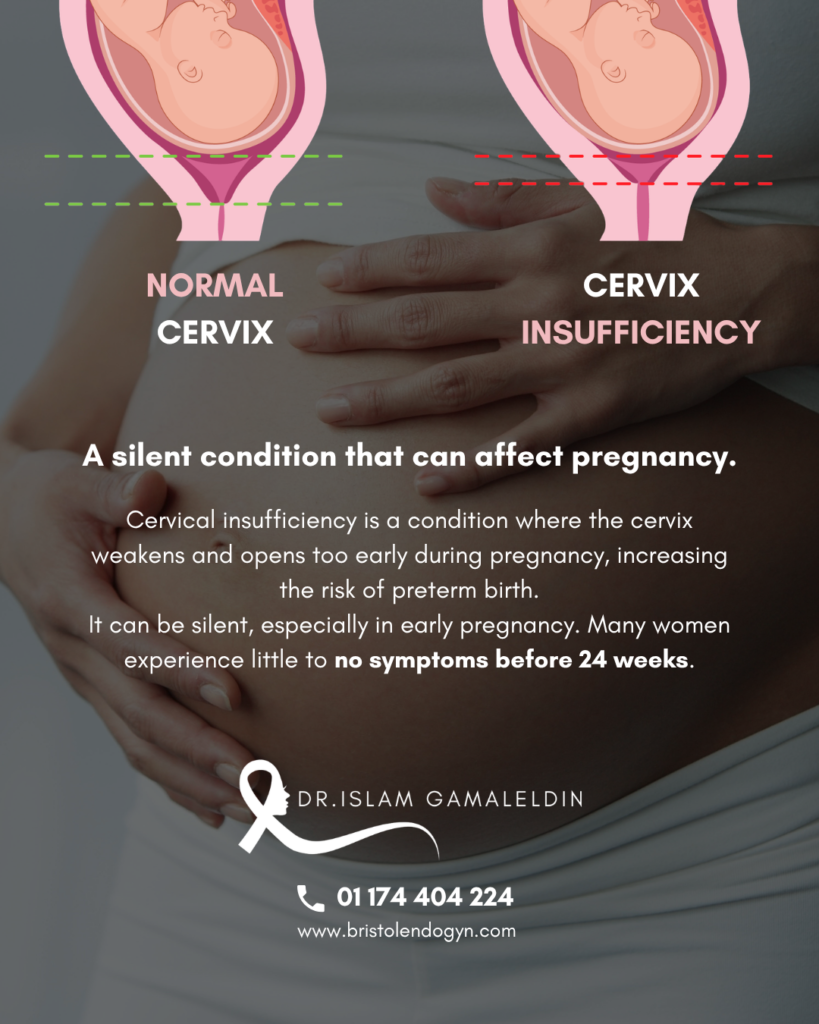
Pregnancy is a time of excitement, but it can also bring unexpected challenges. One condition that often develops without obvious warning signs is cervical insufficiency, also known as an incompetent cervix.
Although relatively uncommon, cervical insufficiency is an important cause of late miscarriage and preterm birth. Early recognition and appropriate management can significantly improve pregnancy outcomes.
What Is Cervical Insufficiency?
The cervix is the lower part of the uterus that remains closed during pregnancy to support the growing baby.
In women with cervical insufficiency, the cervix begins to shorten, soften or open too early without contractions or labour. This can occur during the second trimester and may increase the risk of pregnancy loss or premature birth.
Unlike preterm labour, cervical insufficiency usually develops without painful contractions, making it difficult to recognise.
What Causes Cervical Insufficiency?
The exact cause is not always known. However, several factors may increase the risk, including:
- Previous cervical surgery, such as LLETZ or cone biopsy
- Previous cervical trauma during childbirth
- Congenital abnormalities of the cervix or uterus
- Connective tissue disorders
- A history of second-trimester miscarriage
- Previous spontaneous preterm birth
- Multiple pregnancy (twins or triplets)
Many women diagnosed with cervical insufficiency have no obvious risk factors.
What Are the Symptoms of Cervical Insufficiency?
One of the biggest challenges is that cervical insufficiency often causes few or no symptoms, particularly before 24 weeks of pregnancy.
Some women may experience:
- Mild pelvic pressure
- Low back pain
- Increased vaginal discharge
- Light vaginal spotting
- A sensation that something is pushing down
Because these symptoms can be subtle, many women remain unaware that the cervix has started to open.
How Is Cervical Insufficiency Diagnosed?
Diagnosis is based on a combination of:
- Medical history
- Previous pregnancy outcomes
- Clinical examination
- Transvaginal ultrasound to measure cervical length
Cervical length assessment is one of the most effective ways to identify women at increased risk of preterm birth.
Women with a history of pregnancy loss or premature birth may benefit from regular cervical length monitoring during pregnancy.
What Is Cervical Length Screening?
A transvaginal ultrasound allows specialists to accurately measure the length of the cervix.
A short cervix during pregnancy is associated with an increased risk of:
- Late miscarriage
- Preterm birth
Regular monitoring allows treatment to be offered before the cervix opens further.
How Is Cervical Insufficiency Treated?
Treatment depends on your individual circumstances and pregnancy history.
Options may include:
Cervical Cerclage
A cervical cerclage is a surgical procedure in which a strong stitch is placed around the cervix to help keep it closed during pregnancy.
It is commonly recommended for women with:
- Previous second-trimester pregnancy losses
- Previous spontaneous preterm birth
- Progressive cervical shortening during pregnancy
Progesterone Therapy
For some women with a short cervix, progesterone treatment may help reduce the risk of preterm birth.
Your specialist will determine whether this treatment is appropriate for your pregnancy.
Close Pregnancy Monitoring
Regular ultrasound examinations and specialist antenatal care allow changes in cervical length to be detected early, enabling prompt intervention if needed.
Can Cervical Insufficiency Be Prevented?
Not all cases can be prevented.
However, women who have experienced:
- A late miscarriage
- A previous cervical cerclage
- Preterm birth
- Cervical surgery
should discuss future pregnancies with a specialist before or early in pregnancy.
Early assessment allows an individualised management plan to be developed.
When Should You See a Specialist?
Seek medical advice promptly if you are pregnant and experience:
- Pelvic pressure
- Vaginal bleeding
- Fluid leakage
- Persistent lower back pain
- Previous second-trimester pregnancy loss
- Previous spontaneous preterm birth
Women with previous pregnancy complications should ideally be assessed early in pregnancy by an experienced obstetrician.
Specialist Pregnancy Care at Bristol EndoGyn
At Bristol EndoGyn, we provide specialist assessment and personalised care for women at increased risk of cervical insufficiency, late miscarriage, and preterm birth.
Our goal is early diagnosis, evidence-based treatment and compassionate care throughout pregnancy.
If you have concerns about your pregnancy or have experienced pregnancy loss or premature birth, we are here to help.
📞 0117 440 4224
📍 Spire Bristol Hospital, Bristol, United Kingdom
Can cervical insufficiency cause miscarriage?
Yes. Cervical insufficiency can lead to second-trimester pregnancy loss if the cervix opens too early before the baby is viable.
Is cervical insufficiency painful?
Usually not. Many women experience little or no pain before the cervix begins to open.
Can cervical insufficiency be treated?
Yes. Depending on your pregnancy history and cervical measurements, treatment may include cervical cerclage, progesterone therapy and close ultrasound monitoring.
Can I have a healthy pregnancy after cervical insufficiency?
Yes. With early diagnosis and specialist care, many women with cervical insufficiency go on to have successful pregnancies.