
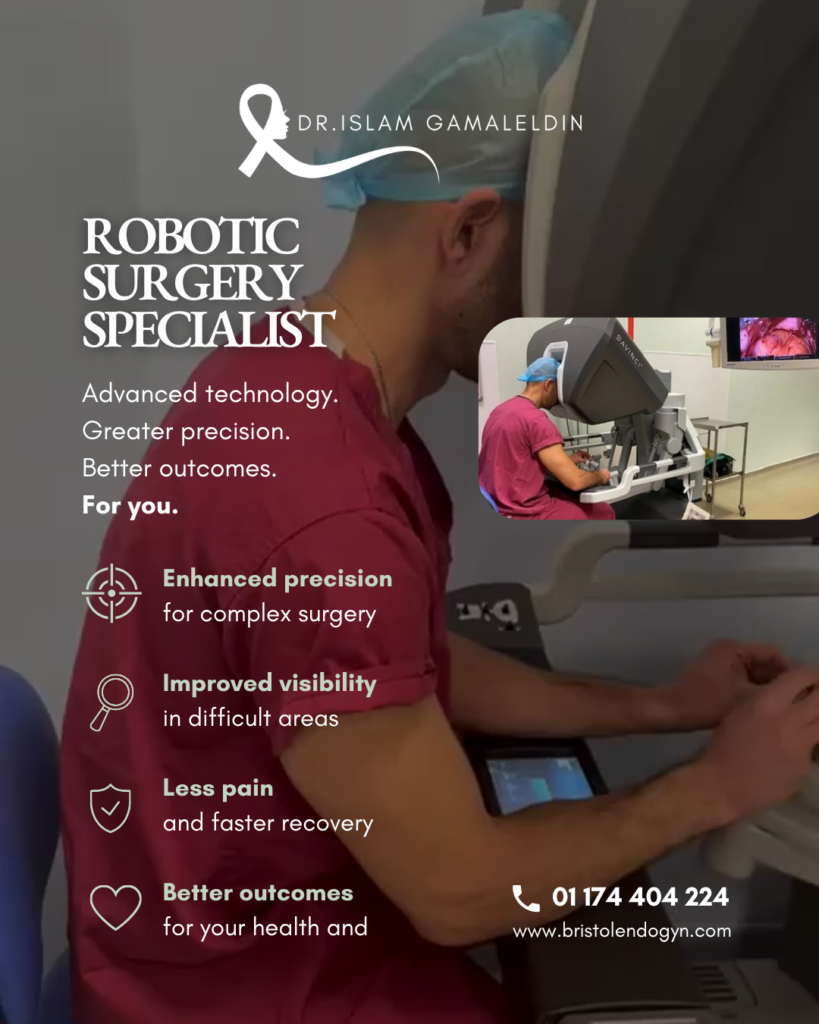
Robotic gynaecological surgery is an advanced form of minimally invasive surgery that can provide surgeons with enhanced precision, visualisation and control during selected procedures.
In complex gynaecological surgery, technology can be extremely valuable. However, the robotic system does not operate independently. It is controlled by the surgeon throughout the procedure, making surgical experience, judgement and expertise essential.
For appropriately selected patients, robotic-assisted surgery can provide another minimally invasive option for treating conditions such as endometriosis, fibroids and other complex benign gynaecological conditions.
What Is Robotic Gynaecological Surgery?
Robotic gynaecological surgery is a type of keyhole surgery in which the surgeon performs the operation using a robotic-assisted surgical system.
Rather than standing directly over the patient and manually holding laparoscopic instruments, the surgeon operates from a specialised console.
The surgeon controls the instruments in real time. The robotic system translates these movements into precise movements of small surgical instruments inside the body.
Importantly, the robot does not make surgical decisions or perform the operation autonomously.
The surgeon remains in control throughout the procedure.
What Are the Advantages of Robotic Surgery?
Robotic-assisted surgery can offer several technical advantages during selected gynaecological procedures.
These may include:
- Enhanced three-dimensional visualisation
- Magnified views of the surgical field
- Precise instrument movement
- Greater dexterity within confined anatomical spaces
- Improved access to difficult areas of the pelvis
- Minimally invasive access through small incisions
These features can be particularly useful when surgery involves complex pelvic anatomy or delicate structures.
Robotic Surgery for Endometriosis
Endometriosis can sometimes involve complex areas of the pelvis and may affect structures close to the ovaries, bowel, bladder, ureters and pelvic sidewalls.
Surgery for endometriosis therefore requires a detailed understanding of pelvic anatomy and careful surgical planning.
Robotic surgery for endometriosis may be considered in selected cases where the additional visualisation and instrument dexterity provided by the robotic platform can assist the surgeon.
The objective of endometriosis surgery is not simply to use the latest technology. The priority is to select the most appropriate surgical approach for each individual patient.
Robotic Surgery vs Laparoscopic Surgery
Both robotic and conventional laparoscopic surgery are minimally invasive surgical techniques.
Traditional laparoscopy uses a camera and long instruments inserted through small abdominal incisions. The surgeon controls these instruments directly.
Robotic-assisted surgery also uses small incisions, but the instruments are controlled from a surgical console.
Neither approach is automatically superior for every patient or every operation.
The choice between laparoscopic and robotic surgery depends on factors including:
- The condition being treated
- The complexity of the operation
- Previous surgery
- Individual anatomy
- Fertility considerations
- The surgeon’s assessment and expertise
A specialist consultation can help determine which approach is most appropriate.
Which Gynaecological Procedures Can Be Performed Robotically?
Robotic technology can be used for a range of selected benign gynaecological procedures.
Depending on the patient’s individual circumstances, these may include surgery for:
Endometriosis
Robotic-assisted techniques may be used during the excision of selected cases of endometriosis, particularly when complex pelvic dissection is required.
Fibroids
A robotic myomectomy may allow selected fibroids to be removed while preserving the uterus.
This can be particularly relevant for women for whom uterine preservation is an important consideration.
Ovarian Cysts
Some ovarian cysts requiring surgical treatment can be managed using minimally invasive techniques.
Where clinically appropriate, surgery may aim to remove the cyst while preserving healthy ovarian tissue.
Hysterectomy
Some hysterectomies can be performed using laparoscopic or robotic-assisted techniques rather than open abdominal surgery.
The appropriate approach depends on the patient’s diagnosis, anatomy and clinical circumstances.
Complex Pelvic Surgery
Robotic technology may also have a role in selected complex pelvic procedures where enhanced visualisation and instrument control are beneficial.
Does Robotic Surgery Mean Less Pain?
Because robotic surgery is performed using a minimally invasive approach, selected patients may experience some of the recognised benefits associated with keyhole surgery compared with open abdominal surgery.
Depending on the procedure and individual circumstances, these can include:
- Smaller incisions
- Less postoperative discomfort
- Shorter hospital stay
- Earlier mobilisation
- Faster return to normal activities
However, recovery varies considerably between patients.
The complexity and extent of the operation remain important factors, and no surgical technique can guarantee a pain-free or complication-free recovery.
Can Robotic Surgery Help Preserve Fertility?
For women who wish to preserve their fertility, surgical planning requires particular care.
Conditions such as endometriosis, ovarian cysts and fibroids can themselves affect fertility, while surgery involving the ovaries, uterus or surrounding structures may also have implications for future reproductive health.
Where appropriate, a fertility-conscious surgical approach aims to treat the underlying condition while considering the preservation of healthy reproductive tissue.
The best approach depends on the diagnosis, disease severity, age, fertility history and future pregnancy plans.
These factors should be discussed before surgery.
Is Robotic Surgery Safe?
As with any surgical procedure, robotic-assisted surgery carries potential risks.
These can include bleeding, infection, injury to surrounding organs, blood clots, anaesthetic complications and the possibility of conversion to another surgical approach if required.
The specific risks vary according to the procedure and the individual patient.
This is why careful patient selection, pre-operative assessment and informed discussion with an experienced surgeon are essential.
The Robot Is a Tool — Surgical Expertise Still Matters
One of the most important things to understand about robotic surgery is that the technology does not replace the surgeon.
The robotic platform is an advanced surgical tool.
It is the surgeon who assesses the patient, plans the operation, controls every movement of the instruments and makes clinical decisions throughout the procedure.
For complex conditions such as endometriosis, technology should therefore be combined with specialist knowledge of the disease, advanced surgical skills and appropriate multidisciplinary support when required.
Who May Be Suitable for Robotic Gynaecological Surgery?
Not every patient requires robotic surgery.
Suitability depends on the condition being treated, previous treatments and operations, the complexity of the disease, general health and individual treatment goals.
For some patients, conventional laparoscopic surgery may be the most appropriate option. For others, robotic-assisted surgery may provide particular technical advantages.
The decision should always be individualised.
Robotic Gynaecological Surgery in Bristol
Specialist assessment is an important first step when considering surgery for endometriosis or another complex benign gynaecological condition.
At Bristol EndoGyn, care is focused on personalised treatment and advanced minimally invasive surgical techniques, including laparoscopic and robotic approaches where clinically appropriate.
The aim is not simply to offer technology, but to select the right procedure and surgical approach for each individual patient.
If you are considering surgery and would like to understand your options, a specialist consultation can help determine the most appropriate next step.
📞 0117 440 4224
🌐 bristolendogyn.com
📍 Spire Bristol Hospital, Bristol, United Kingdom
Frequently Asked Questions
Does the robot perform the operation itself?
No. During robotic gynaecological surgery, the surgeon controls the robotic instruments throughout the operation. The system does not operate autonomously or make clinical decisions.
Is robotic surgery better than laparoscopy?
Not necessarily. Both are advanced minimally invasive techniques. The most appropriate approach depends on the procedure, complexity of the condition, individual patient factors and the surgeon’s assessment.
How long does recovery take after robotic gynaecological surgery?
Recovery depends on the type and complexity of the operation. Many patients undergoing minimally invasive surgery recover faster than they would following a comparable open abdominal procedure, but individual recovery times vary.
Can robotic surgery be used for severe endometriosis?
Robotic-assisted surgery may be considered for selected complex endometriosis cases. The decision depends on the location and extent of disease, symptoms, previous surgery and individual treatment goals.
Will I have scars after robotic surgery?
Robotic surgery requires small abdominal incisions, so some scarring is expected. The number and position of the incisions depend on the procedure being performed.
This article is intended for general information only and does not replace individual medical advice, diagnosis or treatment.