
Adenomyosis: When Painful Periods Are More Than “Just Your Cycle”

Mar 27, 2026

Struggling with heavy periods and intense cramps? It might be more than just your cycle. Many women silently endure painful menstruation, not realizing it could be a medical condition called adenomyosis.

Understanding adenomyosis is the first step toward finding relief and improving your quality of life.


What Is Adenomyosis?

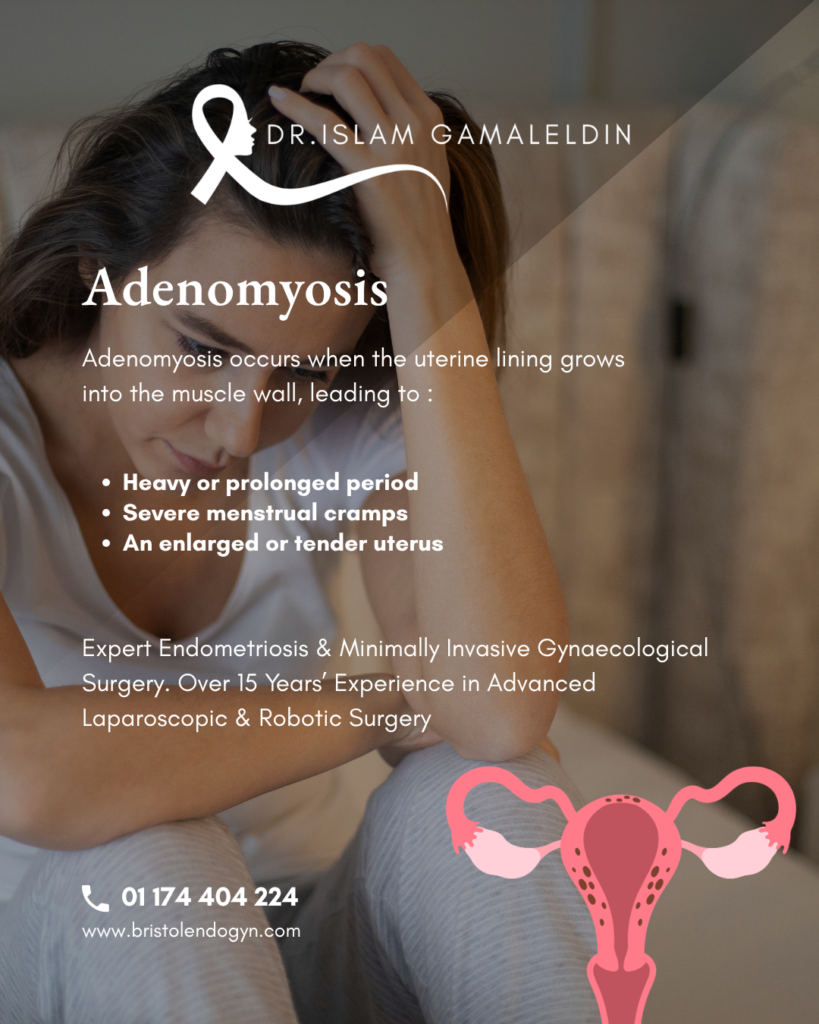
Adenomyosis is a condition where the inner lining of the uterus (the endometrium) grows into the muscular wall of the uterus. This can cause the uterus to become enlarged and lead to painful and heavy periods.

Although it is a common condition, it is often underdiagnosed or mistaken for other gynecological issues.


What Causes Adenomyosis?

The exact cause of adenomyosis is not fully understood, but several factors may contribute:

  • Hormonal changes (especially estrogen)
  • Previous uterine surgery (such as C-sections)
  • Childbirth-related inflammation
  • Invasion of endometrial tissue into the uterine muscle
  • Age (most common in women aged 30–50)

Common Symptoms of Adenomyosis

Symptoms can vary from mild to severe. Some women may not experience any symptoms at all.

The most common signs include:

  • Heavy or prolonged menstrual bleeding
  • Severe menstrual cramps (dysmenorrhea)
  • Chronic pelvic pain
  • Pain during intercourse
  • Passing blood clots during periods
  • Bloating or pressure in the lower abdomen

If these symptoms are affecting your daily life, it’s important to seek medical advice.


When Should You See a Doctor?

You should consult a specialist if you experience:

  • Periods that interfere with your daily activities
  • Increasing pain over time
  • Heavy bleeding requiring frequent pad/tampon changes
  • Symptoms that do not improve with over-the-counter pain relief

Early diagnosis can help prevent worsening symptoms and improve treatment outcomes.


How Is Adenomyosis Diagnosed?

Diagnosis may involve:

  • Detailed medical history
  • Pelvic examination
  • Ultrasound imaging
  • MRI (in more complex cases)

Because symptoms can overlap with conditions like fibroids or endometriosis, proper evaluation is essential.


Treatment Options for Adenomyosis

Treatment depends on the severity of symptoms, age, and future fertility plans.

Non-Surgical Treatments

  • Anti-inflammatory medications (for pain relief)
  • Hormonal therapies (such as birth control or IUD)
  • Lifestyle adjustments

Surgical Options

  • Minimally invasive procedures
  • Uterine-sparing treatments
  • Hysterectomy (in severe cases and when no future pregnancy is desired)

A personalized approach is key to achieving the best outcome.


Living With Adenomyosis

Living with adenomyosis can be challenging, but the right support and treatment can make a significant difference. Listening to your body and seeking professional advice early can help you regain control over your health and well-being.


Book an Appointment

If you are experiencing heavy periods or severe cramps, don’t ignore the signs.

📞 01 174 404 224
🌐 www.bristolendogyn.com
📍 Spire Bristol Hospital, The Glen, Redland Hill, Redland, Bristol BS6 6UT, United Kingdom

Take the first step toward relief and better well-being today.

Dr Islam Gamaleldin to Join AFRIC 2026 as an International Speaker

I am delighted to announce that I will be joining AFRIC 2026 – The Queens Edition as an International Speaker, representing the United Kingdom at this international conference dedicated to fertility and reproductive health. The conference will take place on 10–11...

Hysteroscopy: What It Is, Why It’s Done and What to Expect

Hysteroscopy is a minimally invasive gynaecological procedure that allows a specialist to examine the inside of the uterus directly. Using a thin instrument called a hysteroscope, the uterine cavity can be carefully assessed without making an abdominal incision....

Gynaecological Surgery Procedures: Specialist Minimally Invasive Care in Bristol

Modern gynaecological surgery procedures can treat a wide range of conditions affecting women's health, from endometriosis and ovarian cysts to fibroids, heavy menstrual bleeding and cervical insufficiency. Whenever clinically appropriate, minimally invasive...

Robotic Gynaecological Surgery: Precision, Expertise and Minimally Invasive Care

Robotic gynaecological surgery is an advanced form of minimally invasive surgery that can provide surgeons with enhanced precision, visualisation and control during selected procedures. In complex gynaecological surgery, technology can be extremely valuable. However,...

Chronic Pelvic Pain: Causes, Symptoms and Treatment

Chronic pelvic pain is a common condition that affects millions of women worldwide. It can interfere with work, relationships, exercise, sleep and overall quality of life. Unfortunately, many women are told that painful periods or ongoing pelvic discomfort are...

Cervical Insufficiency: Causes, Symptoms and Treatment During Pregnancy

Pregnancy is a time of excitement, but it can also bring unexpected challenges. One condition that often develops without obvious warning signs is cervical insufficiency, also known as an incompetent cervix. Although relatively uncommon, cervical insufficiency is an...

Ovarian Cyst Symptoms: Signs You Shouldn’t Ignore

Ovarian cysts are very common and, in many cases, cause no symptoms and disappear without treatment. However, some cysts can become large, rupture, twist or cause persistent symptoms. Understanding ovarian cyst symptoms and recognising the warning signs can help you...

Can You Have Endometriosis With a Normal MRI?

Yes. It is possible to have endometriosis even if your MRI or ultrasound results are normal. For many patients experiencing persistent pelvic pain, painful periods or other symptoms associated with endometriosis, receiving a “normal” scan result can be confusing and...

Endometriosis Symptoms: 5 Signs You Should Never Ignore | Dr. Islam Gamaleldin

Many women believe painful periods are simply part of being a woman. However, persistent pelvic pain, heavy periods, or ongoing fatigue are not normal and should never be ignored. Recognising the early symptoms of endometriosis is the first step towards receiving the...

Diaphragmatic Endometriosis: Symptoms, Diagnosis & Treatment

Endometriosis is commonly associated with pelvic pain, but it can also affect areas outside the pelvis. One of the rarest forms is diaphragmatic endometriosis, where endometrial-like tissue grows on or within the diaphragm—the muscle that separates the chest from the...