
Period pain is common, but severe period pain that disrupts your daily life should never be dismissed as something you simply have to tolerate.
While mild menstrual cramps can occur as part of a normal menstrual cycle, persistent or debilitating pain may be associated with an underlying gynaecological condition, such as endometriosis, adenomyosis or uterine fibroids.
Recognising the warning signs of severe period pain is an important step towards understanding your symptoms and seeking appropriate medical care.
At Bristol Endogyn, Dr Islam Gamaleldin provides specialist assessment and personalised treatment for women experiencing painful periods, chronic pelvic pain and suspected endometriosis.
What Causes Severe Period Pain?
Menstrual pain, medically known as dysmenorrhoea, usually occurs when the uterus contracts during menstruation.
These contractions are influenced by hormone-like substances called prostaglandins.
There are two main types of menstrual pain.
Primary Dysmenorrhoea
Primary dysmenorrhoea refers to menstrual pain that occurs without an identifiable underlying pelvic condition.
It often begins during adolescence and may improve with suitable pain relief or hormonal treatment.
Secondary Dysmenorrhoea
Secondary dysmenorrhoea occurs when menstrual pain is associated with an underlying condition.
Possible causes include:
- Endometriosis: Tissue similar to the lining of the womb grows outside the uterus, potentially causing inflammation and pelvic pain.
- Adenomyosis: Tissue similar to the uterine lining is found within the muscular wall of the uterus.
- Uterine fibroids: Benign growths that may cause heavy menstrual bleeding and pelvic discomfort.
- Pelvic inflammatory disease: An infection involving the upper reproductive tract.
Understanding the cause is important because treatment varies depending on the underlying condition.
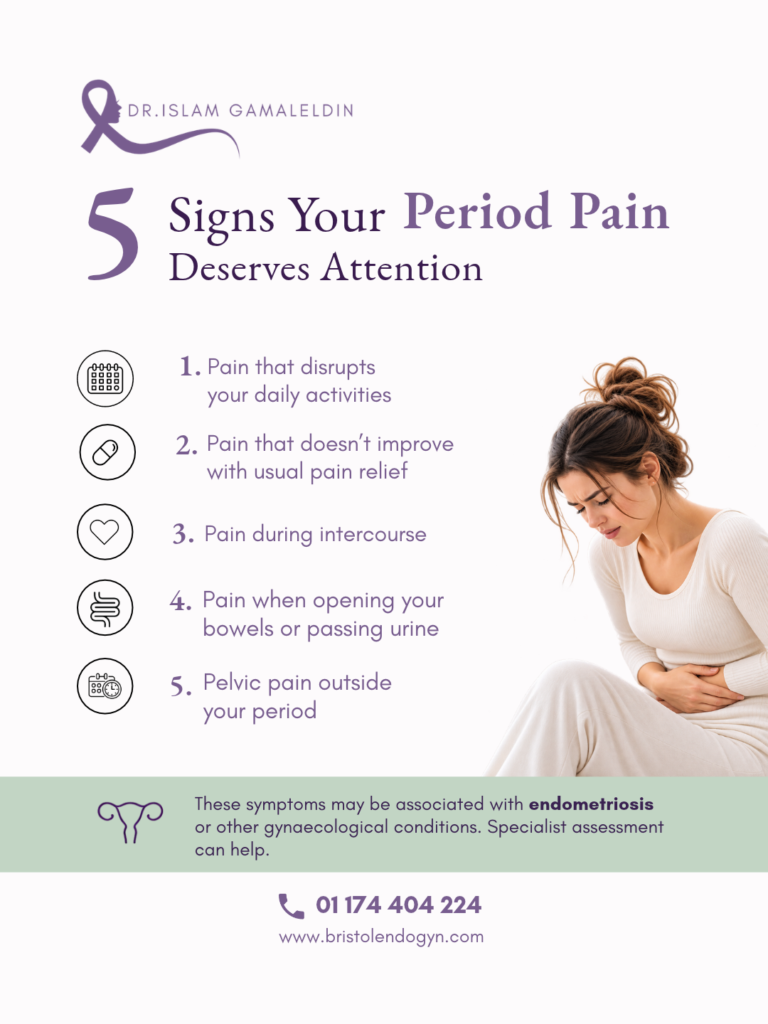
5 Signs Your Period Pain Deserves Medical Attention
1. Period Pain That Disrupts Your Daily Activities
Do you regularly miss work, school or social activities because of menstrual pain?
Pain that prevents you from carrying out normal daily activities deserves medical assessment.
Severe period pain may be accompanied by:
- Intense lower abdominal cramps.
- Lower back pain.
- Nausea or vomiting.
- Fatigue and difficulty concentrating.
- Difficulty standing, walking or completing everyday tasks.
Although these symptoms do not automatically indicate endometriosis, their impact on your quality of life is a valid reason to seek specialist advice.
2. Pain That Does Not Improve With Usual Pain Relief
Some menstrual discomfort responds to commonly used pain relief, such as paracetamol or anti-inflammatory medication.
However, if your pain remains severe despite appropriate treatment, further investigation may be necessary.
Persistent symptoms can sometimes indicate endometriosis, adenomyosis or another pelvic condition.
You should not need to repeatedly increase pain medication or tolerate uncontrolled symptoms without discussing them with a healthcare professional.
A gynaecologist can review your symptoms, previous treatments and whether additional investigations may be helpful.
3. Pain During Sexual Intercourse
Pain during intercourse, particularly deep pelvic pain, may be associated with endometriosis.
This symptom is sometimes called dyspareunia.
It may occur during intercourse or persist afterwards.
Possible causes include:
- Endometriosis affecting pelvic structures.
- Pelvic floor muscle dysfunction.
- Pelvic inflammatory disease.
- Other gynaecological or pelvic pain conditions.
Pain during intercourse is not something you should feel embarrassed about discussing.
An appropriate assessment can help identify possible causes and guide treatment.
4. Pain When Opening Your Bowels or Passing Urine
Some women experience bowel or bladder symptoms that become worse around menstruation.
These may include:
- Pain during bowel movements.
- Pain when passing urine.
- Cyclical bowel discomfort.
- Bloating or changes in bowel habits.
- Pelvic pressure.
In some cases, these symptoms may be associated with endometriosis involving or affecting structures near the bowel or bladder.
However, digestive and urinary symptoms can also have non-gynaecological causes, including irritable bowel syndrome or urinary tract conditions.
Persistent symptoms should be investigated rather than automatically attributed to menstruation.
5. Pelvic Pain Outside Your Period
Endometriosis-related pain does not always occur exclusively during menstruation.
Some women experience chronic pelvic pain throughout the month.
Symptoms may include:
- Persistent lower abdominal discomfort.
- Pelvic pain between periods.
- Pain during ovulation.
- Lower back discomfort.
- Pain that becomes worse with certain activities.
Pelvic pain outside menstruation may have several possible causes, including endometriosis, pelvic floor dysfunction and bladder or bowel conditions.
A specialist assessment can help determine the most appropriate next steps.
Could Severe Period Pain Be a Sign of Endometriosis?
Endometriosis is a chronic inflammatory condition in which tissue similar to the lining of the uterus grows outside the womb.
It affects approximately 1 in 10 women and girls of reproductive age worldwide.
Common symptoms include:
- Severe menstrual pain.
- Chronic pelvic pain.
- Pain during or after intercourse.
- Painful bowel movements or urination.
- Fatigue.
- Fertility difficulties in some patients.
Importantly, the severity of pain does not always reflect the extent of endometriosis.
Some women with extensive disease experience relatively mild symptoms, while others with less extensive disease may experience significant pain.
Endometriosis is also not the only possible explanation for severe period pain.
How Is Endometriosis Diagnosed?
Diagnosis usually begins with a detailed discussion of symptoms, menstrual history and the impact of pain on daily life.
Specialist Gynaecological Assessment
Your gynaecologist may ask about:
- When your symptoms began.
- Whether pain occurs during or outside menstruation.
- The severity and location of your pain.
- Bowel or bladder symptoms.
- Previous treatments.
- Fertility plans and reproductive history.
Pelvic Ultrasound
Pelvic ultrasound can help identify certain gynaecological conditions, including ovarian endometriomas, fibroids and some forms of deep endometriosis.
However, a normal ultrasound does not rule out endometriosis, particularly superficial disease.
MRI
MRI may be useful in selected patients, particularly when deep endometriosis is suspected or more detailed assessment is required.
Laparoscopy
Laparoscopy is a minimally invasive surgical procedure that allows direct examination of the pelvis.
It may be considered when clinically appropriate, particularly if symptoms persist despite treatment or surgery is being planned.
Laparoscopy is not required before every patient can receive a clinical diagnosis or begin treatment for suspected endometriosis.
The most suitable diagnostic approach depends on symptoms, imaging findings, treatment response and individual circumstances.
Treatment Options for Severe Period Pain
Treatment depends on the cause of the pain, its severity and your personal circumstances.
Pain Management
Appropriate pain relief, including anti-inflammatory medication where suitable, may help manage menstrual cramps.
Medication should be selected with consideration of your medical history and potential side effects.
Hormonal Treatment
Hormonal treatments may reduce menstrual bleeding and pain in some patients.
Options may include the combined contraceptive pill, progestogen-based treatments or a levonorgestrel-releasing intrauterine system.
The choice depends on individual suitability, symptoms and fertility plans.
Pelvic Pain Management
Some women may benefit from a multidisciplinary approach involving pelvic health physiotherapy, pain management and other supportive strategies.
Minimally Invasive Surgery
When appropriate, surgery may be considered for certain underlying conditions, including endometriosis.
Dr Islam Gamaleldin specialises in advanced laparoscopic and robotic-assisted gynaecological surgery.
For selected patients, surgical treatment may include laparoscopic excision of endometriosis.
The decision to operate should always involve a discussion of potential benefits, risks, alternatives and future fertility goals.
When Should You See a Gynaecologist for Period Pain?
Consider booking a gynaecological consultation if:
- Period pain regularly interferes with work, school or daily activities.
- Your symptoms are becoming progressively worse.
- Pain does not improve with usual treatment.
- You experience pain during intercourse.
- You have bowel or bladder pain associated with your menstrual cycle.
- You experience pelvic pain outside your period.
- You have fertility concerns alongside painful periods.
Seek urgent medical attention for sudden severe pelvic pain, fainting, fever, very heavy bleeding with weakness, or pain when pregnancy is possible.
Specialist Care for Severe Period Pain in Bristol
At Bristol Endogyn, Dr Islam Gamaleldin provides specialist assessment and treatment for severe period pain, endometriosis and other benign gynaecological conditions.
His approach combines clinical expertise, appropriate investigations and personalised treatment planning.
Treatment may involve medical management, further imaging or minimally invasive surgery when clinically indicated.
The aim is to help patients understand their symptoms, explore suitable treatment options and make informed decisions about their care.
Book a Gynaecology Consultation in Bristol
If severe period pain is affecting your quality of life, specialist assessment can help identify possible causes and guide appropriate treatment.
Dr Islam Gamaleldin
Consultant Gynaecologist & Endometriosis Specialist
Spire Bristol Hospital
The Glen, Redland Hill, Redland
Bristol BS6 6UT, United Kingdom
Telephone: 0117 440 4224
Website: www.bristolendogyn.com
Frequently Asked Questions About Severe Period Pain
Is severe period pain normal?
Mild menstrual cramps are common, but pain that significantly disrupts daily activities, becomes progressively worse or does not respond to usual treatment should be assessed.
Does severe period pain always mean endometriosis?
No. Severe period pain can have several causes, including primary dysmenorrhoea, adenomyosis and fibroids. Endometriosis is one possible explanation.
Can endometriosis cause pain between periods?
Yes. Endometriosis may cause pelvic pain during menstruation and at other times throughout the menstrual cycle.
Can I have endometriosis if my ultrasound is normal?
Yes. Some forms of endometriosis, particularly superficial lesions, may not be visible on ultrasound.
Can endometriosis affect fertility?
Endometriosis can be associated with fertility difficulties, but many women with endometriosis conceive naturally. Individual assessment is important.
When should I seek specialist advice for painful periods?
Seek advice if pain interferes with daily activities, worsens over time, is associated with bowel or bladder symptoms, or persists despite appropriate treatment.
Conclusion
Severe period pain should not be dismissed as an unavoidable part of being a woman.
Pain that disrupts everyday life, does not respond to usual treatment or occurs alongside bowel, bladder or sexual symptoms deserves attention.
Although these symptoms do not necessarily indicate endometriosis, identifying the underlying cause can help guide appropriate care.
Your symptoms matter. Early assessment can make a difference.
Contact Bristol Endogyn to discuss specialist gynaecological assessment and personalised treatment options.