
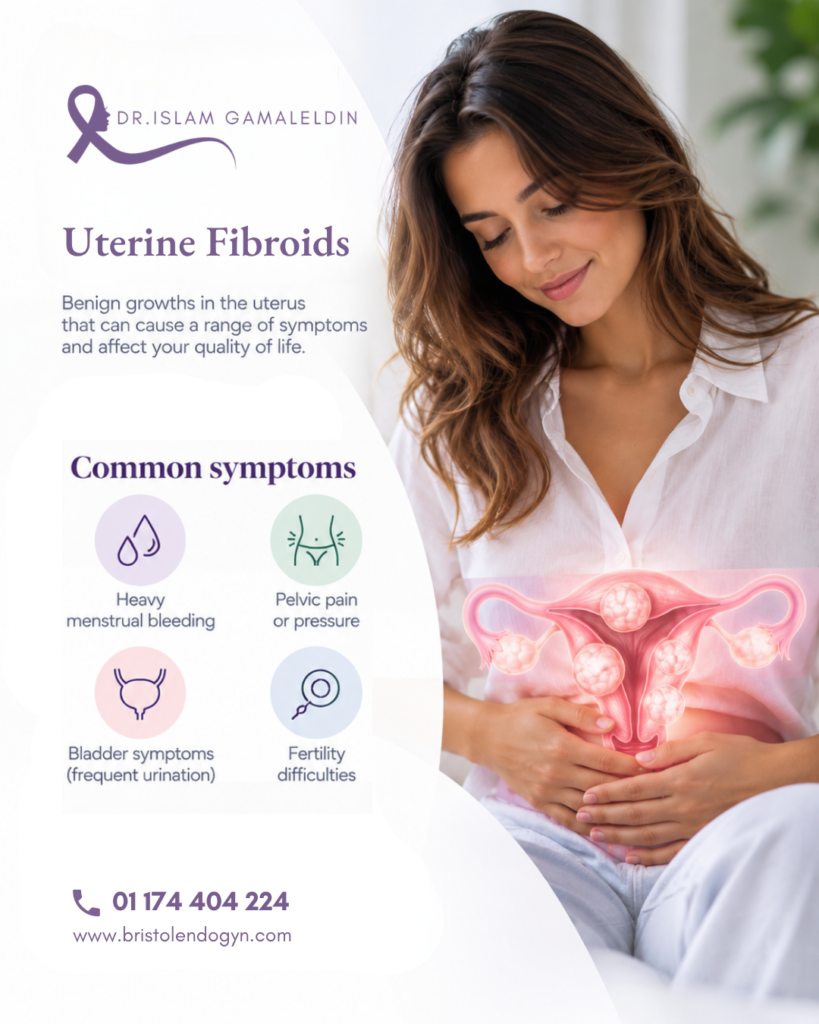
Uterine fibroids are common, non-cancerous growths that develop in or around the uterus (womb). Although many women experience no symptoms, fibroids can sometimes cause heavy menstrual bleeding, pelvic pain, bladder pressure and fertility difficulties.
Understanding the symptoms of uterine fibroids and knowing when to seek specialist advice can help women make informed decisions about their reproductive health.
At Bristol Endogyn, Dr Islam Gamaleldin provides specialist gynaecological assessment and personalised treatment for uterine fibroids, including advanced minimally invasive surgical options when appropriate.
What Are Uterine Fibroids?
Uterine fibroids, also known as leiomyomas or myomas, are benign growths that develop from the muscular wall of the uterus.
They vary considerably in size, from very small nodules to larger growths that can change the shape or size of the womb.
Fibroids are particularly common during the reproductive years. Some women have a single fibroid, while others develop several.
Most fibroids are not cancerous, and many do not require treatment.
Whether treatment is necessary depends on symptoms, fibroid size and location, fertility plans and individual preferences.
What Are the Common Symptoms of Uterine Fibroids?
Many women with uterine fibroids have no noticeable symptoms. Others experience symptoms that affect their everyday activities and quality of life.
1. Heavy Menstrual Bleeding
Heavy or prolonged periods are among the most common symptoms of uterine fibroids.
Women may experience:
- Menstrual bleeding that interferes with daily activities.
- Periods lasting longer than usual.
- Passing large blood clots.
- Tiredness or weakness associated with iron-deficiency anaemia.
Persistent heavy menstrual bleeding should be investigated to identify the cause and assess for anaemia.
2. Pelvic Pain or Pressure
Larger fibroids may cause a sensation of heaviness, pressure or discomfort in the lower abdomen.
Some women experience persistent pelvic pain or lower back discomfort.
The severity of symptoms does not always correspond directly to the size of a fibroid.
3. Bladder Symptoms and Frequent Urination
Fibroids can sometimes press against the bladder, leading to:
- Frequent urination.
- A feeling of bladder pressure.
- Difficulty emptying the bladder completely.
Occasionally, very large fibroids may also affect bowel function.
4. Fertility Difficulties
Most women with fibroids can become pregnant naturally.
However, certain fibroids, particularly those that distort the uterine cavity, may interfere with implantation or increase the risk of some pregnancy complications.
The effect on fertility depends primarily on the fibroid’s size, location and relationship to the uterine cavity.
What Causes Uterine Fibroids?
The exact cause of uterine fibroids is not fully understood.
However, several factors are associated with their development.
Hormonal Factors
Oestrogen and progesterone influence fibroid growth.
Fibroids commonly develop during the reproductive years and may shrink after menopause as hormone levels decline.
Family History
Women with a close family member who has fibroids may have an increased likelihood of developing them.
Age and Other Risk Factors
Fibroids become more common with increasing reproductive age.
Other recognised associations include ethnicity, obesity and certain reproductive factors.
Having one or more risk factors does not mean that a woman will necessarily develop symptomatic fibroids.
Different Types of Uterine Fibroids
Fibroids are classified according to their location within the uterus.
Intramural Fibroids
These develop within the muscular wall of the uterus.
They are among the most common types and may cause heavy periods, pelvic pressure or discomfort.
Submucosal Fibroids
These grow towards or into the uterine cavity.
Even relatively small submucosal fibroids can cause significant menstrual bleeding and may affect fertility.
Subserosal Fibroids
These grow towards the outer surface of the uterus.
They may cause pressure symptoms, particularly when large, but are less likely to cause heavy menstrual bleeding.
Pedunculated Fibroids
These fibroids are attached to the uterus by a stalk.
Depending on their location and size, they may cause pain or pressure.
How Are Uterine Fibroids Diagnosed?
An accurate diagnosis is essential to determine whether fibroids are responsible for symptoms and which treatment options may be suitable.
Pelvic Ultrasound
Pelvic ultrasound is usually the first-line imaging investigation for suspected uterine fibroids.
A transabdominal or transvaginal ultrasound can help identify:
- The number of fibroids.
- Their size and location.
- Their relationship to the uterine cavity.
- Other possible causes of pelvic symptoms.
Magnetic Resonance Imaging (MRI)
MRI may be recommended when fibroids are numerous or complex, or when more detailed mapping is required before certain treatments.
Hysteroscopy
A hysteroscopy involves examining the inside of the uterus using a thin camera.
It may be recommended when a submucosal fibroid is suspected, particularly in women experiencing heavy menstrual bleeding or fertility difficulties.
Blood Tests
Women with heavy menstrual bleeding may require a full blood count to check for anaemia.
Further investigations depend on symptoms and clinical findings.
What Are the Treatment Options for Uterine Fibroids?
Not all uterine fibroids require treatment.
Management should be personalised according to symptoms, fibroid characteristics, age, general health and future pregnancy plans.
1. Monitoring Without Immediate Treatment
If fibroids are not causing symptoms, treatment may not be necessary.
A specialist may recommend observation or follow-up imaging depending on the clinical circumstances.
2. Medication for Fibroid Symptoms
Medication may help reduce heavy menstrual bleeding or manage pain.
Options can include:
- Tranexamic acid for heavy periods.
- Anti-inflammatory medicines for menstrual pain, where suitable.
- Hormonal treatments, including selected contraceptive methods.
- Gonadotrophin-releasing hormone (GnRH) treatments in selected circumstances.
Some treatments primarily control symptoms rather than remove fibroids.
The choice depends on medical history, treatment goals and potential side effects.
3. Hysteroscopic Fibroid Removal
Hysteroscopic myomectomy may be suitable for certain submucosal fibroids.
The procedure is performed through the vagina and cervix, without abdominal incisions.
It can be particularly useful when fibroids inside the uterine cavity contribute to heavy menstrual bleeding.
4. Laparoscopic or Robotic Myomectomy
A myomectomy removes fibroids while preserving the uterus.
For appropriately selected patients, the procedure may be performed using minimally invasive laparoscopic or robotic-assisted techniques.
Potential advantages of minimally invasive surgery can include smaller incisions, less postoperative discomfort and a shorter recovery compared with open surgery.
However, the most appropriate surgical approach depends on the size, number and position of the fibroids, as well as the patient’s circumstances.
Myomectomy may be considered for women who wish to preserve their uterus or maintain the possibility of future pregnancy.
5. Hysterectomy
A hysterectomy involves removing the uterus and provides a definitive treatment for uterine fibroids.
It may be considered when symptoms are severe, other treatments are unsuitable or unsuccessful, and future pregnancy is not desired.
Where appropriate, hysterectomy may be performed laparoscopically or with robotic assistance.
6. Other Fibroid Treatments
Other options may include uterine artery embolisation, which reduces blood supply to the fibroids.
Suitability depends on symptoms, fibroid characteristics and fertility goals.
A specialist discussion is important because different treatments have different implications for future pregnancy and the likelihood of needing further treatment.
Can Uterine Fibroids Affect Fertility and Pregnancy?
Many women with fibroids conceive naturally and experience healthy pregnancies.
However, fibroids that distort the uterine cavity may reduce fertility or contribute to pregnancy complications.
Potential concerns include:
- Difficulty with embryo implantation.
- Miscarriage in some circumstances.
- Increased risk of certain pregnancy complications.
- Problems related to fibroid size or position during pregnancy.
Not every fibroid needs to be removed before attempting pregnancy.
Treatment decisions should be based on the fibroid’s location, reproductive history and an individual assessment of potential benefits and risks.
Uterine Fibroids vs Endometriosis: What Is the Difference?
Uterine fibroids and endometriosis are different gynaecological conditions, although some symptoms overlap.
Uterine fibroids are benign growths of the uterine muscle that may cause heavy periods, pelvic pressure and bladder symptoms.
Endometriosis is a condition in which tissue similar to the lining of the uterus grows outside the womb. It can cause painful periods, chronic pelvic pain, pain during intercourse and fertility difficulties.
Some women have both conditions.
Because symptoms can overlap, a comprehensive gynaecological assessment is important for an accurate diagnosis.
When Should You See a Gynaecologist for Fibroids?
Consider booking a specialist consultation if you experience:
- Heavy periods that affect your quality of life.
- Persistent pelvic pain or pressure.
- Frequent urination associated with pelvic discomfort.
- Symptoms of anaemia, such as unusual tiredness or breathlessness.
- Fertility difficulties or concerns about pregnancy.
- Fibroids that appear to be increasing in size.
Seek urgent medical care for severe acute pain, very heavy bleeding accompanied by faintness or weakness, or an inability to pass urine.
Early assessment can help identify suitable treatment options before symptoms become more disruptive.
Specialist Uterine Fibroid Treatment in Bristol
At Bristol Endogyn, Dr Islam Gamaleldin provides specialist care for women experiencing uterine fibroids and other benign gynaecological conditions.
His practice includes assessment of heavy menstrual bleeding, pelvic pain, fertility-related gynaecological concerns and advanced minimally invasive surgery.
Where surgical treatment is appropriate, options may include hysteroscopic procedures, laparoscopic surgery or robotic-assisted surgery, depending on the individual case.
The focus is on providing clear explanations, evidence-based recommendations and treatment tailored to each patient’s needs.
Book a Private Gynaecology Consultation in Bristol
If you are experiencing heavy periods, pelvic pain or symptoms associated with uterine fibroids, a specialist consultation can help clarify your diagnosis and treatment options.
Dr Islam Gamaleldin
Consultant Gynaecologist & Endometriosis Specialist
Location: Spire Bristol Hospital, The Glen, Redland Hill, Redland, Bristol BS6 6UT, United Kingdom
Telephone: 0117 440 4224
Website: www.bristolendogyn.com
Frequently Asked Questions About Uterine Fibroids
Are uterine fibroids cancerous?
Uterine fibroids are benign growths. Uterine sarcoma is a rare, separate malignancy that may occasionally resemble a fibroid. New or concerning symptoms should be assessed appropriately.
Can fibroids disappear naturally?
Fibroids may shrink after menopause as hormone levels decline. Some also change in size during the reproductive years, but many do not disappear completely.
Can uterine fibroids cause heavy periods?
Yes. Fibroids, particularly those that affect the uterine cavity, can contribute to heavy or prolonged menstrual bleeding.
Can fibroids cause frequent urination?
Yes. Larger fibroids may place pressure on the bladder and lead to urinary frequency or difficulty emptying the bladder.
Can I get pregnant if I have fibroids?
Yes. Many women with fibroids conceive naturally. Certain fibroids may affect fertility depending on their location and relationship to the uterine cavity.
Do all fibroids need to be removed?
No. Fibroids that do not cause symptoms or other clinical concerns often require no treatment. The decision depends on individual circumstances.
Can fibroids be removed without removing the uterus?
Yes. Myomectomy removes fibroids while preserving the uterus. The suitability of this approach depends on fibroid characteristics and individual treatment goals.
Is robotic surgery available for uterine fibroids?
Robotic-assisted myomectomy or hysterectomy may be an option for selected patients. A specialist assessment is needed to determine the most suitable approach.
Conclusion
Uterine fibroids are common and often harmless, but they can significantly affect quality of life when they cause heavy menstrual bleeding, pelvic pain or pressure symptoms.
Fortunately, several treatment options are available, ranging from monitoring and medication to minimally invasive surgery.
Understanding your symptoms is the first step towards personalised care.
If you are concerned about uterine fibroids, contact Bristol Endogyn to discuss specialist assessment and treatment options.