
Women’s health conditions are common, but symptoms such as severe period pain, chronic pelvic pain and heavy menstrual bleeding can still be underestimated or normalised.
The numbers highlight why awareness and timely assessment matter.
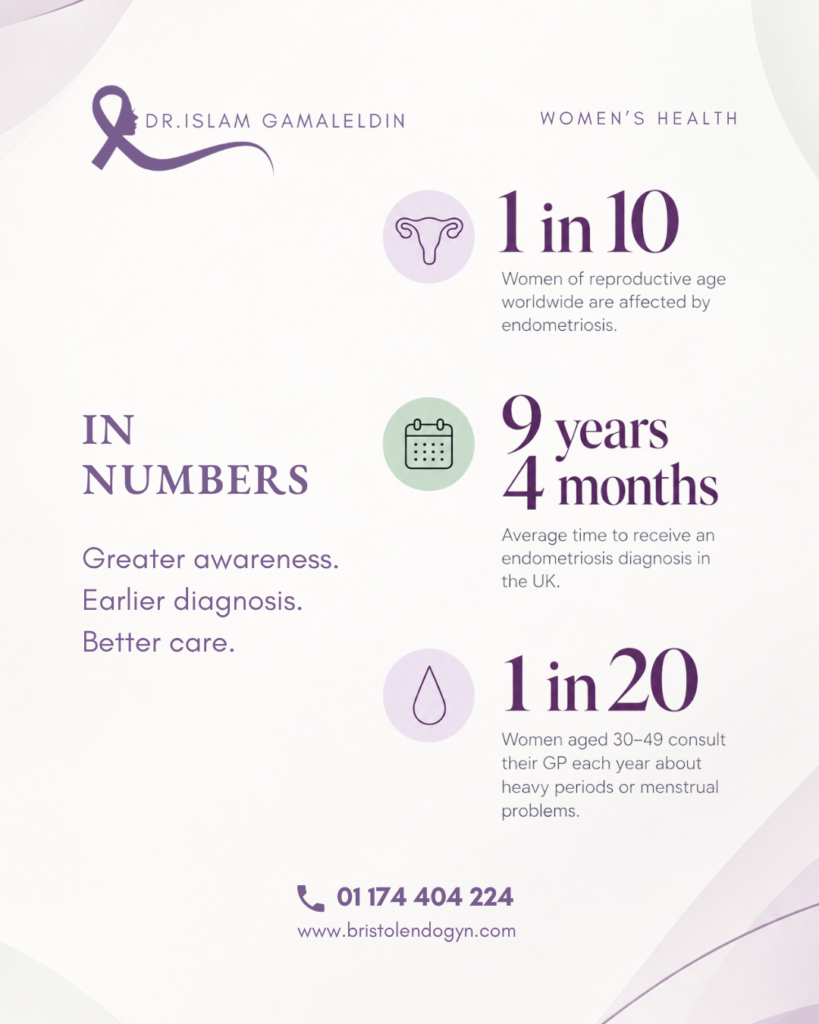
Around 1 in 10 women of reproductive age worldwide are affected by endometriosis, while the average time to receive an endometriosis diagnosis in the UK has reached 9 years and 4 months.
These statistics reinforce an important message: persistent or severe gynaecological symptoms deserve appropriate investigation.
1 in 10 Women: How Common Is Endometriosis?
The World Health Organization estimates that endometriosis affects approximately 10% of women of reproductive age worldwide — around 190 million people.
Endometriosis is a chronic condition in which tissue similar to the lining of the uterus grows outside the uterus. It most commonly affects the pelvis, although disease can occur elsewhere in the body.
Symptoms can vary considerably between patients and may include:
- Severe period pain
- Chronic pelvic pain
- Pain during or after sexual intercourse
- Pain associated with bowel movements or urination
- Heavy menstrual bleeding
- Abdominal bloating
- Fertility difficulties
Some women experience significant symptoms that affect work, education, relationships and everyday activities. Others may have less obvious symptoms.
This variation is one reason why recognising endometriosis is not always straightforward.
9 Years and 4 Months: The UK Endometriosis Diagnosis Delay
One of the most striking statistics is the time patients can wait for a diagnosis.
In March 2026, the Royal College of Obstetricians and Gynaecologists reported findings from Endometriosis UK showing that the average time to receive an endometriosis diagnosis in the UK had reached 9 years and 4 months. RCOG
That is an increase from the eight-year average reported in 2020. RCOG
A delay of this length can mean years of living with symptoms before receiving an explanation and appropriate treatment plan.
Why Can Endometriosis Take So Long to Diagnose?
Endometriosis does not present in exactly the same way in every patient.
Symptoms may overlap with other gynaecological, gastrointestinal or urinary conditions. Period pain may also be normalised, causing some patients to delay seeking medical advice.
Diagnosis itself can require specialist assessment.
The RCOG explains that investigations may include a transvaginal ultrasound or MRI, depending on the symptoms and suspected extent of disease. Importantly, a normal ultrasound or MRI does not necessarily rule out endometriosis. RCOG
Clinical history, symptoms, examination and appropriate imaging therefore need to be considered together.
Heavy Periods: Another Important Women’s Health Issue
Endometriosis is not the only condition that can affect menstrual health.
NICE states that approximately 1 in 20 women aged between 30 and 49 see their GP each year for help with heavy periods or menstrual problems.
Heavy menstrual bleeding can significantly interfere with everyday life and may occur alongside symptoms such as pelvic pain.
It can have several possible causes, including fibroids, adenomyosis and other gynaecological conditions.
This is why persistent heavy bleeding should be assessed rather than automatically accepted as a normal part of menstruation.
When Is Period Pain Not Normal?
Some discomfort during menstruation is common, but severe or disabling pain deserves attention.
You should consider seeking medical assessment when period or pelvic symptoms are interfering with your normal life — particularly when they prevent you from working, studying, exercising, sleeping or carrying out everyday activities.
Symptoms such as severe menstrual pain, pain during intercourse, cyclical bowel or bladder symptoms, chronic pelvic pain or fertility difficulties can be associated with endometriosis.
The severity of pain does not always tell us the extent of the disease, so symptoms should be considered individually.
How Is Endometriosis Investigated?
Assessment usually begins with a detailed medical and menstrual history.
Depending on the individual patient, investigations may include specialist gynaecological ultrasound and, in selected cases, MRI.
Ultrasound can identify ovarian endometriomas and may detect other signs of pelvic endometriosis. MRI can be particularly useful when more extensive disease is suspected, including possible bowel or bladder involvement. RCOG
Laparoscopy — keyhole surgery — can also be used in the diagnosis and treatment of endometriosis in appropriate circumstances. RCOG
The investigation pathway should be tailored to the patient’s symptoms, clinical findings and individual circumstances.
Treatment Should Be Personalised
There is no single treatment that is appropriate for everyone with endometriosis.
Management can include pain-relieving medication, hormonal treatment and surgery. The choice depends on factors including symptoms, disease location and extent, previous treatment, personal preferences and whether pregnancy is desired.
For selected patients requiring surgery, minimally invasive laparoscopic or robotic techniques may form part of treatment.
Patients with extensive endometriosis, including suspected bowel or bladder involvement, may require specialist multidisciplinary care. RCOG
Earlier Awareness, Earlier Assessment, Better Care
Statistics such as 1 in 10 and 9 years 4 months represent more than numbers.
They represent women living with pain, uncertainty and symptoms that can affect their physical health, fertility, relationships and quality of life.
Greater awareness can help patients recognise when symptoms warrant medical attention and encourage more timely assessment.
Severe period pain should not automatically be dismissed as simply part of being a woman.
Listen to your symptoms. Seek appropriate assessment. Ask questions about your treatment options.
Specialist Endometriosis and Gynaecology Care in Bristol
Dr Islam Gamaleldin provides specialist assessment and personalised treatment for endometriosis and a range of benign gynaecological conditions, including pelvic pain, heavy menstrual bleeding, fibroids and fertility-related concerns.
Treatment is tailored to the individual patient and may include medical management or advanced minimally invasive laparoscopic and robotic surgery when appropriate.
Dr Islam Gamaleldin
Consultant Gynaecologist & Endometriosis Specialist
📍 Spire Bristol Hospital
The Glen, Redland Hill, Redland
Bristol BS6 6UT
📞 0117 440 4224