
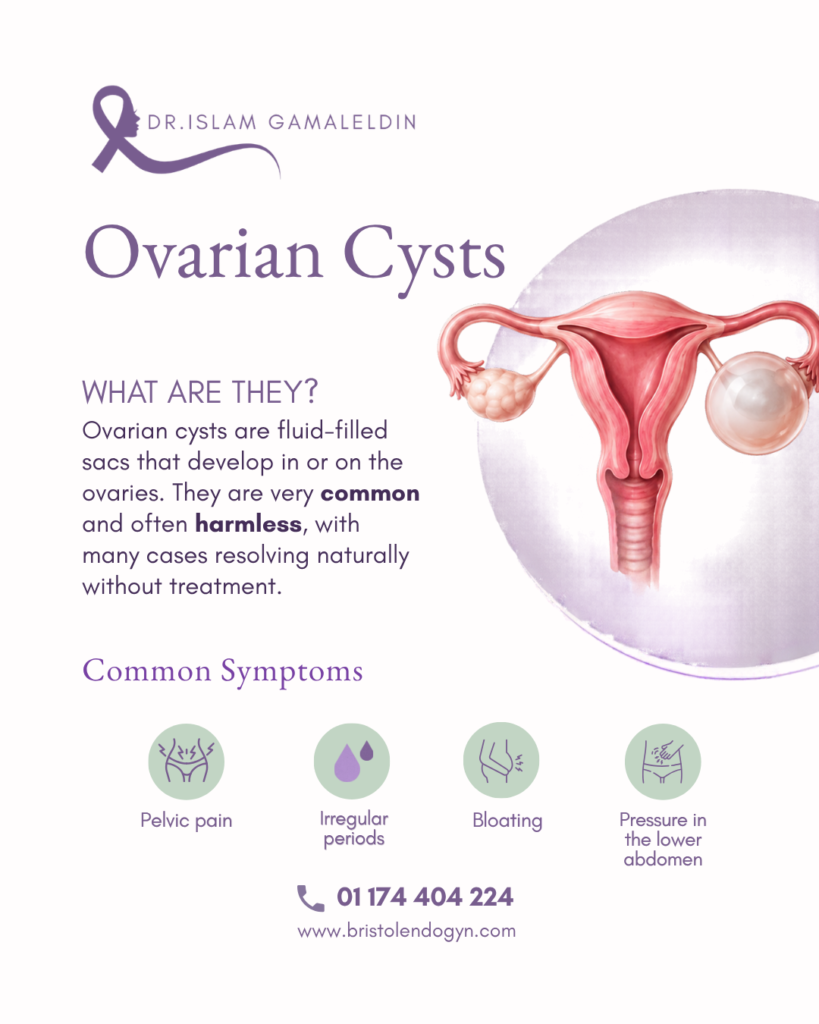
Ovarian cysts are common, particularly during the reproductive years. While most ovarian cysts are harmless and disappear naturally without treatment, some can cause pelvic pain, bloating, menstrual changes or persistent discomfort.
Understanding the symptoms of ovarian cysts and knowing when to seek medical advice can help women receive appropriate care and avoid unnecessary complications.
At Bristol Endogyn, Dr Islam Gamaleldin provides specialist gynaecological assessment and personalised treatment for ovarian cysts and other women’s health conditions.
What Are Ovarian Cysts?
Ovarian cysts are fluid-filled sacs that develop inside or on the surface of one or both ovaries.
The ovaries are part of the female reproductive system and are responsible for releasing eggs and producing hormones such as oestrogen and progesterone.
Many ovarian cysts form naturally as part of the menstrual cycle. These are known as functional cysts and often disappear within a few menstrual cycles.
However, not all ovarian cysts are the same. Some require further investigation, monitoring or treatment.
What Are the Common Symptoms of Ovarian Cysts?
Many women with ovarian cysts experience no symptoms at all. Cysts are sometimes discovered incidentally during an ultrasound scan performed for another reason.
When symptoms occur, they may include:
- Pelvic pain: A dull ache or discomfort, sometimes more noticeable on one side.
- Bloating: A sensation of abdominal fullness or swelling.
- Lower abdominal pressure: Discomfort or a feeling of heaviness in the pelvis.
- Menstrual changes: Some women experience irregular periods, although this is not specific to ovarian cysts.
- Pain during intercourse: Particularly with certain positions or deeper penetration.
- Urinary frequency: Larger cysts may place pressure on the bladder.
These symptoms can also occur with other gynaecological conditions, including endometriosis, adenomyosis and uterine fibroids.
A specialist assessment can help identify the underlying cause.
What Causes Ovarian Cysts?
Ovarian cysts can develop for several reasons, depending on their type.
1. Functional Ovarian Cysts
Functional cysts are associated with the normal menstrual cycle.
They include follicular cysts, which develop when a follicle does not release an egg as expected, and corpus luteum cysts, which form after ovulation.
Most functional cysts resolve without intervention.
2. Endometriomas
An endometrioma is an ovarian cyst associated with endometriosis.
It contains old blood and is sometimes called a chocolate cyst.
Endometriomas may be associated with pelvic pain, painful periods and fertility difficulties.
Treatment depends on symptoms, cyst characteristics, ovarian reserve and future fertility plans.
3. Dermoid Cysts
Dermoid cysts, also called mature cystic teratomas, are usually benign ovarian growths.
They may contain different types of tissue, including fat, hair or skin.
Some dermoid cysts require surgical removal, particularly if they are large, symptomatic or at risk of complications.
4. Cystadenomas
Cystadenomas are usually benign ovarian tumours that may contain watery or mucus-like fluid.
They can grow large and may require surgical treatment depending on their size, appearance and associated symptoms.
Are Ovarian Cysts Dangerous?
Most ovarian cysts in premenopausal women are benign.
However, some cysts may cause complications or require further assessment.
Potential complications include:
Ovarian torsion: The ovary twists, potentially interrupting its blood supply. This is a surgical emergency.
Cyst rupture: A cyst may rupture and cause sudden pelvic pain, sometimes accompanied by internal bleeding.
Persistent or complex cysts: Cysts that do not resolve or have unusual ultrasound features may need further investigation.
Ovarian cancer: Although most cysts are not cancerous, the risk of malignancy is higher after menopause. Suspicious findings require appropriate specialist assessment.
When Should You Seek Urgent Medical Attention?
Seek urgent medical care if you experience:
- Sudden, severe pelvic or abdominal pain.
- Pelvic pain accompanied by vomiting or fever.
- Fainting, severe dizziness or marked weakness.
- Severe pain with a possibility of pregnancy.
These symptoms may indicate ovarian torsion, cyst rupture, ectopic pregnancy or another urgent condition.
How Are Ovarian Cysts Diagnosed?
The diagnosis of ovarian cysts usually begins with a review of symptoms, medical history and, when appropriate, a pelvic examination.
Pelvic Ultrasound
A pelvic ultrasound is the main investigation used to assess ovarian cysts.
Transvaginal ultrasound, where appropriate and with patient consent, can provide detailed images of the ovaries and surrounding pelvic structures.
Ultrasound helps determine:
- The size and location of the cyst.
- Whether it contains fluid, solid tissue or both.
- Whether its appearance suggests a functional or more complex cyst.
- Whether additional investigations are needed.
Additional Investigations
Depending on the findings, further investigations may include blood tests, pregnancy testing or MRI.
In selected circumstances, tumour markers such as CA125 may be requested. However, CA125 can be elevated in several benign conditions and cannot diagnose ovarian cancer on its own.
The choice of investigation depends on age, menopausal status, symptoms and ultrasound findings.
How Are Ovarian Cysts Treated?
Treatment is personalised according to the type, size and appearance of the cyst, the patient’s symptoms and their individual circumstances.
1. Monitoring and Follow-Up
Many simple ovarian cysts do not require immediate treatment.
A repeat ultrasound may be recommended to check whether the cyst has resolved or changed.
Some small, simple cysts require no routine follow-up, depending on the patient’s age and clinical findings.
2. Medical Management
Medication may help manage symptoms associated with ovarian cysts or underlying conditions.
Hormonal contraception may reduce the formation of some new functional cysts, but it does not reliably make an existing functional cyst disappear faster.
3. Minimally Invasive Ovarian Cyst Surgery
Surgery may be considered if an ovarian cyst is persistent, large, symptomatic, complex or concerning on imaging.
When appropriate, laparoscopic ovarian cystectomy allows the surgeon to remove a cyst through small abdominal incisions while aiming to preserve healthy ovarian tissue.
In selected complex cases, robotic-assisted surgery may also be considered.
However, not every ovarian cyst requires surgery, and the benefits and risks should be discussed carefully.
Can Ovarian Cysts Affect Fertility?
Many ovarian cysts do not affect fertility.
Functional ovarian cysts usually have no lasting impact on the ability to conceive.
However, some conditions associated with ovarian cysts, particularly endometriosis, can affect reproductive health.
Surgery involving the ovaries may also affect ovarian reserve, especially when treating endometriomas.
For women planning a pregnancy, treatment decisions should consider fertility goals, ovarian function and the potential risks and benefits of surgery.
Ovarian Cysts and Endometriosis
Ovarian cysts and endometriosis are sometimes closely related.
Endometriomas are one manifestation of endometriosis and may occur alongside disease elsewhere in the pelvis.
Women with endometriomas may experience severe menstrual pain, chronic pelvic pain, pain during intercourse or fertility difficulties.
Specialist assessment can help determine whether monitoring, medical management or surgery is the most appropriate option.
Importantly, the presence of an endometrioma does not automatically mean surgery is necessary.
When Should You See a Gynaecologist for an Ovarian Cyst?
Consider a specialist gynaecological consultation if you have:
- Persistent or recurring pelvic pain.
- Ongoing abdominal bloating or pressure.
- A cyst that is increasing in size.
- A complex ovarian cyst identified on ultrasound.
- Fertility concerns associated with ovarian cysts.
- Symptoms that interfere with everyday life.
Persistent bloating, early satiety or increasing abdominal size should also be assessed promptly, particularly after menopause.
An accurate diagnosis is essential to determine the most appropriate next steps.
Specialist Ovarian Cyst Assessment in Bristol
At Bristol Endogyn, Dr Islam Gamaleldin provides specialist assessment and management of ovarian cysts, endometriosis and other benign gynaecological conditions.
With expertise in advanced minimally invasive gynaecological surgery, the approach focuses on understanding each patient’s symptoms, clinical findings and treatment priorities.
Where surgery is appropriate, the aim is to select a safe and effective approach while considering ovarian function and future fertility wishes.
Book a Gynaecology Consultation in Bristol
If you are experiencing persistent pelvic pain, bloating or symptoms associated with ovarian cysts, specialist assessment can help identify the cause and guide personalised treatment.
Dr Islam Gamaleldin
Consultant Gynaecologist & Endometriosis Specialist
Location: Spire Bristol Hospital, The Glen, Redland Hill, Bristol BS6 6UT, United Kingdom
Phone: 0117 440 4224
Website: www.bristolendogyn.com
Frequently Asked Questions About Ovarian Cysts
Can ovarian cysts disappear naturally?
Yes. Many functional ovarian cysts resolve naturally within a few menstrual cycles without requiring treatment.
What does ovarian cyst pain feel like?
Ovarian cyst pain may feel like a dull ache, pressure or discomfort in the lower abdomen, sometimes on one side. Sudden, severe pain requires urgent assessment.
Can ovarian cysts cause bloating?
Yes. Some ovarian cysts, particularly larger cysts, can cause abdominal bloating, fullness or pelvic pressure. Persistent bloating should not automatically be attributed to a cyst without assessment.
Do ovarian cysts always require surgery?
No. Many cysts can be monitored or require no treatment. Surgery is considered when clinically indicated, based on symptoms, imaging findings and individual risk factors.
Can ovarian cysts become cancerous?
Most ovarian cysts are benign. However, certain cyst characteristics and factors such as postmenopausal status may increase concern about malignancy and require further investigation.
Can I become pregnant if I have an ovarian cyst?
Yes. Many women with ovarian cysts conceive naturally. The effect on fertility depends on the type of cyst, underlying conditions and any treatment required.
Conclusion
Ovarian cysts are common and often harmless, but persistent symptoms should never be overlooked.
Understanding the type of cyst, its characteristics and its potential impact on your health allows treatment to be tailored to your individual needs.
Early assessment. Accurate diagnosis. Personalised care.
If you are concerned about ovarian cysts or persistent pelvic symptoms, contact Bristol Endogyn to arrange a specialist consultation.