
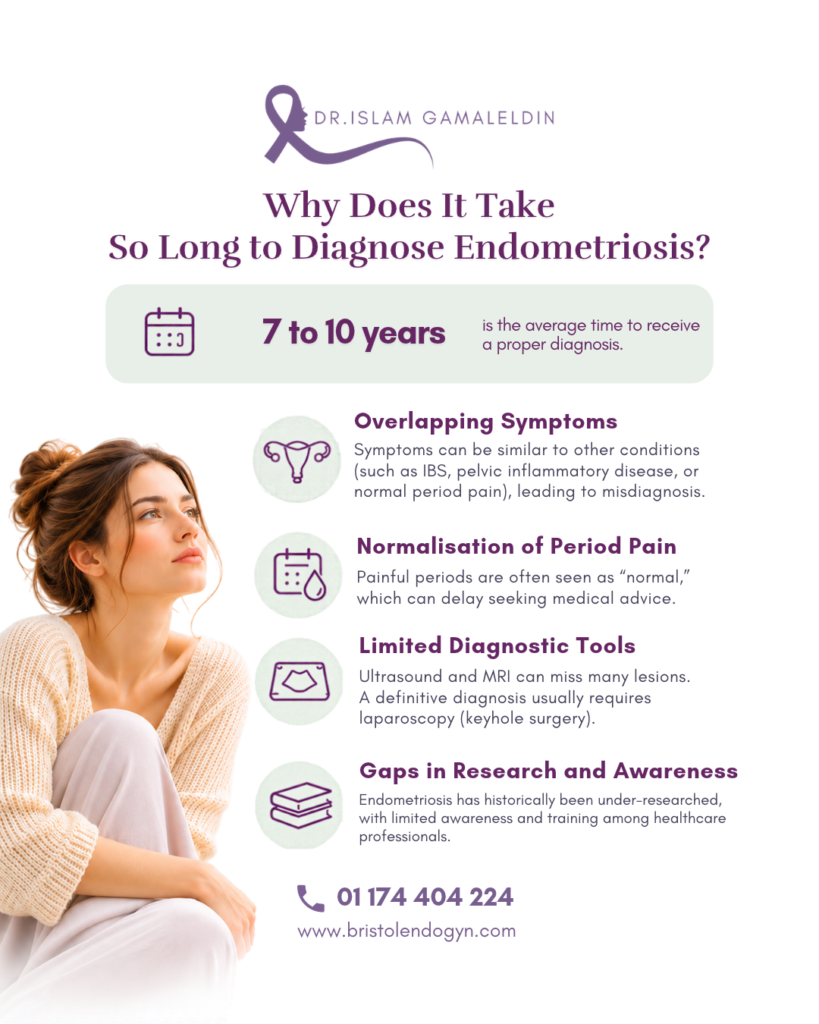
Endometriosis affects approximately 1 in 10 women and girls of reproductive age worldwide, yet receiving a diagnosis can take many years.
For some patients, the journey involves repeated GP appointments, investigations, different treatments and consultations with several healthcare professionals before endometriosis is recognised.
In the UK, an Endometriosis UK survey published in 2024 reported an average diagnostic delay of 8 years and 10 months. This illustrates the challenges many patients face in obtaining answers.
But why does endometriosis take so long to diagnose?
The reasons include overlapping symptoms, the normalisation of menstrual pain, limitations in diagnostic investigations and gaps in awareness.
At Bristol Endogyn, Dr Islam Gamaleldin provides specialist assessment and personalised treatment for women experiencing suspected endometriosis, chronic pelvic pain and related gynaecological symptoms.
What Is Endometriosis?
Endometriosis is a chronic inflammatory condition in which tissue similar to the lining of the uterus grows outside the womb.
It most commonly affects structures within the pelvis, including the ovaries, pelvic lining and tissues surrounding the uterus.
In some cases, endometriosis can also affect the bowel, bladder or areas outside the pelvis.
Symptoms vary considerably between individuals.
Common symptoms include:
- Severe menstrual pain.
- Chronic pelvic pain.
- Pain during or after sexual intercourse.
- Pain when opening the bowels or passing urine.
- Fatigue.
- Fertility difficulties in some patients.
Some women have significant endometriosis with relatively few symptoms, while others experience severe pain despite having less extensive disease.
This variation is one reason diagnosis can be challenging.
4 Reasons Why Endometriosis Diagnosis Is Often Delayed
1. Endometriosis Symptoms Overlap With Other Conditions
One of the biggest challenges in diagnosing endometriosis is that its symptoms are not unique to the condition.
Pelvic pain, bloating, bowel changes and urinary discomfort can also occur with other medical conditions.
These include:
- Irritable bowel syndrome (IBS).
- Adenomyosis.
- Pelvic inflammatory disease.
- Bladder pain syndrome.
- Pelvic floor dysfunction.
- Other causes of chronic pelvic pain.
For example, a woman experiencing cyclical bowel pain and bloating may initially be investigated for a digestive condition.
Similarly, bladder symptoms may lead to investigations for urinary problems.
Because endometriosis can affect several body systems, patients sometimes consult different specialists before a possible gynaecological cause is identified.
A detailed menstrual and symptom history can help recognise patterns that suggest endometriosis.
2. The Normalisation of Severe Period Pain
Menstrual pain is common, but severe pain that interferes with everyday activities should not be automatically considered normal.
Many women grow up believing that painful periods are simply something they must tolerate.
As a result, they may delay seeking medical advice.
Some patients report:
- Missing school or work because of period pain.
- Requiring frequent pain medication.
- Experiencing vomiting or severe fatigue during menstruation.
- Avoiding social activities.
- Struggling with pain that progressively worsens.
When symptoms are repeatedly attributed to normal menstruation, further assessment may be delayed.
Although not every woman with severe period pain has endometriosis, persistent or debilitating symptoms deserve appropriate investigation.
3. Limitations of Diagnostic Investigations
Endometriosis cannot always be identified through routine investigations.
There is currently no single blood test that can reliably diagnose or exclude the condition.
Can Ultrasound Detect Endometriosis?
A specialist pelvic ultrasound can identify certain forms of endometriosis, including ovarian endometriomas and some deep endometriotic lesions.
It can also help identify other possible causes of symptoms, such as fibroids or ovarian cysts.
However, superficial endometriosis may not be visible on ultrasound.
A normal ultrasound does not rule out endometriosis.
Can MRI Detect Endometriosis?
MRI can be useful in selected patients, particularly when deep endometriosis is suspected or detailed assessment is needed before surgery.
Nevertheless, MRI does not detect every form of the disease.
Is Laparoscopy Always Necessary?
Laparoscopy is a minimally invasive surgical procedure that allows direct examination of the pelvis and, where appropriate, treatment of endometriosis.
However, surgery is not required before every patient can receive a clinical diagnosis or begin treatment.
Current UK guidance supports assessment based on symptoms, examination and appropriate imaging, with treatment offered according to individual circumstances.
Laparoscopy may be considered when clinically appropriate, including in some patients whose imaging is normal.
The decision should consider symptoms, previous treatment, potential benefits, surgical risks and fertility plans.
4. Gaps in Awareness, Education and Research
Endometriosis has historically received less attention than its prevalence and impact warrant.
Limited awareness of the condition can contribute to delays in recognising symptoms.
Some misconceptions include:
- Endometriosis only affects women with fertility difficulties.
- Severe period pain is always normal.
- A normal ultrasound excludes endometriosis.
- Endometriosis only occurs in older women.
- The severity of symptoms always reflects the extent of disease.
These beliefs can prevent patients from receiving timely specialist assessment.
Improving professional education, public awareness and access to appropriate investigations is essential to reducing diagnostic delays.
Why Does an Earlier Endometriosis Diagnosis Matter?
Endometriosis can affect physical health, emotional wellbeing, relationships and quality of life.
Prolonged diagnostic delays may mean patients experience years of uncontrolled symptoms without a clear explanation.
Earlier recognition can help patients:
- Understand the possible cause of their symptoms.
- Access suitable pain management.
- Explore hormonal treatment where appropriate.
- Receive specialist imaging when indicated.
- Discuss fertility concerns.
- Consider surgery when clinically necessary.
- Develop a personalised long-term management plan.
An earlier diagnosis does not guarantee that symptoms will resolve, but it can support more informed treatment decisions and improve access to appropriate care.
How Can Endometriosis Be Diagnosed Earlier?
Reducing diagnostic delays requires a combination of symptom awareness, appropriate clinical assessment and access to specialist expertise.
Recognising the Warning Signs
Patients should consider seeking medical advice if they experience:
- Period pain that interferes with daily activities.
- Pelvic pain outside menstruation.
- Pain during intercourse.
- Cyclical bowel or bladder symptoms.
- Persistent pelvic pain despite usual treatment.
- Fertility difficulties associated with pelvic symptoms.
Keeping a Symptom Diary
Recording symptoms over several menstrual cycles may help identify patterns.
Useful details include:
- When pain occurs.
- Its severity and location.
- Whether symptoms are related to menstruation.
- Bowel or bladder changes.
- The impact on work, sleep and daily activities.
- Treatments tried and their effectiveness.
A symptom diary can support discussions with a GP or gynaecologist.
Specialist Assessment
A specialist gynaecological assessment can help determine whether symptoms suggest endometriosis or another condition.
Investigations and treatment should be tailored to the patient’s history, examination findings, symptoms and individual priorities.
What Are the Treatment Options for Endometriosis?
Although there is currently no definitive cure for endometriosis, several treatments can help manage symptoms.
Medical Treatment
Options may include appropriate pain relief and hormonal treatments designed to reduce menstrual symptoms and endometriosis-associated pain.
The choice depends on medical suitability, side effects and pregnancy plans.
Specialist Pain Management
Some patients benefit from a multidisciplinary approach that may include pelvic health physiotherapy, pain management and psychological support.
Laparoscopic Excision Surgery
For selected patients, laparoscopic excision surgery may be considered to remove endometriotic lesions.
Surgery may be particularly relevant when symptoms persist despite medical treatment, deep disease is suspected or other clinical factors make an operation appropriate.
However, surgery is not necessary for everyone, and symptoms may recur after treatment.
The benefits, risks and alternatives should be discussed with an experienced specialist.
Endometriosis Specialist in Bristol
At Bristol Endogyn, Dr Islam Gamaleldin provides specialist gynaecological assessment and management for women with suspected or confirmed endometriosis.
His expertise includes advanced laparoscopic and robotic-assisted gynaecological surgery, alongside the assessment of chronic pelvic pain and fertility-related gynaecological concerns.
The approach focuses on:
- Listening carefully to symptoms and concerns.
- Reviewing previous investigations and treatments.
- Recommending appropriate diagnostic investigations.
- Explaining medical and surgical options.
- Developing a personalised treatment plan.
The aim is to provide clear information and evidence-based care that reflects each patient’s individual needs.
Frequently Asked Questions About Endometriosis Diagnosis
How long does it take to diagnose endometriosis in the UK?
A 2024 Endometriosis UK survey reported an average diagnostic delay of 8 years and 10 months. This is a survey estimate, and individual experiences vary.
Why is endometriosis difficult to diagnose?
Symptoms can overlap with digestive, urinary and other gynaecological conditions. Some forms of endometriosis are also difficult to detect using routine imaging.
Can you have endometriosis with a normal ultrasound?
Yes. A normal ultrasound does not exclude endometriosis, particularly superficial disease.
Is surgery always needed to diagnose endometriosis?
No. Clinical assessment and appropriate imaging can support diagnosis and treatment without surgery in many cases. Laparoscopy may still be appropriate for selected patients.
Can teenagers have endometriosis?
Yes. Endometriosis can affect adolescents, and severe menstrual pain that disrupts daily activities should be assessed.
Does endometriosis always cause infertility?
No. Many women with endometriosis conceive naturally. However, the condition can be associated with fertility difficulties in some patients.
When should I see an endometriosis specialist?
Consider specialist assessment if you experience severe or persistent period pain, chronic pelvic pain, pain during intercourse, cyclical bowel or bladder symptoms, or symptoms that remain uncontrolled despite treatment.
Book an Endometriosis Consultation in Bristol
If you have been experiencing persistent pelvic pain or severe menstrual symptoms without a clear diagnosis, specialist assessment may help you understand your options.
Dr Islam Gamaleldin
Consultant Gynaecologist & Endometriosis Specialist
Spire Bristol Hospital
The Glen, Redland Hill, Redland
Bristol BS6 6UT, United Kingdom
Telephone: 0117 440 4224
Website: www.bristolendogyn.com
Conclusion
The delay in diagnosing endometriosis is a significant challenge in women’s healthcare.
Overlapping symptoms, the normalisation of severe period pain, diagnostic limitations and gaps in awareness can all contribute to patients waiting years for answers.
Improving symptom recognition, access to specialist assessment and appropriate investigations can help reduce these delays.
Severe period pain deserves attention. Your symptoms deserve to be taken seriously.
If you are concerned about endometriosis, contact Bristol Endogyn to discuss personalised specialist car