
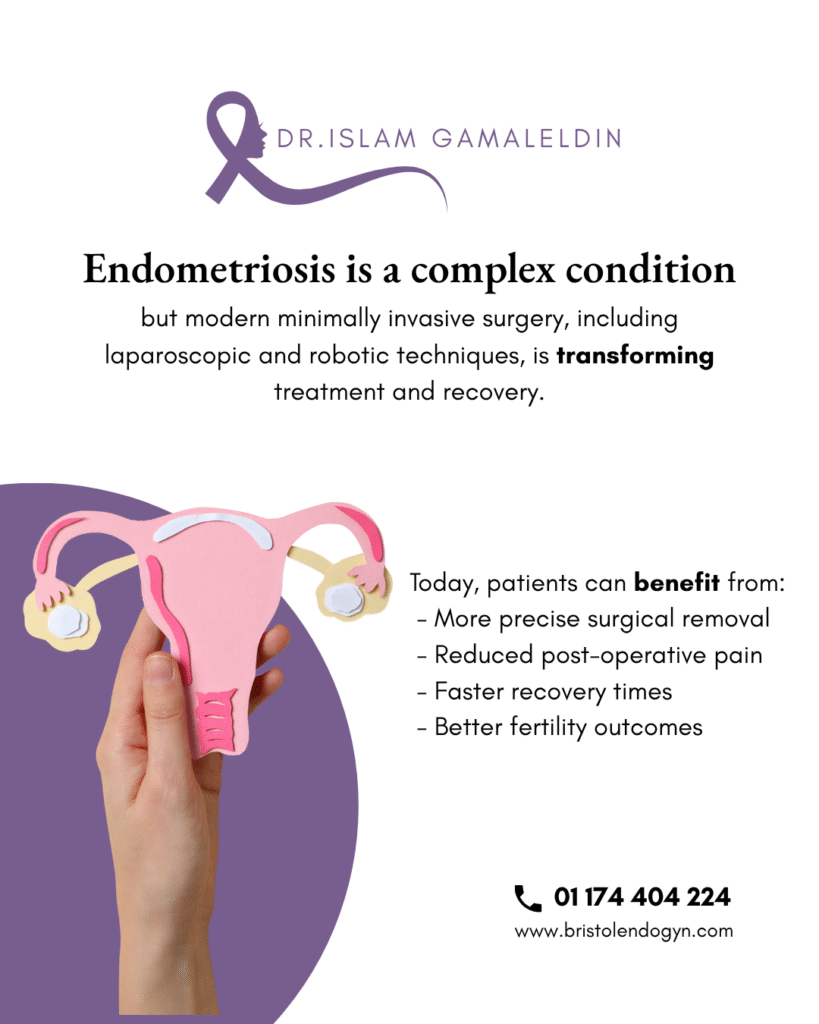
Endometriosis is a long-term, often debilitating condition in which tissue similar to the lining of the womb grows outside the uterus. For many women, it causes chronic pelvic pain, heavy periods, ovarian cysts, and sometimes difficulties with fertility. Because symptoms can overlap with other conditions, diagnosis is often delayed—leaving patients searching for answers and relief.
Today, advances in minimally invasive surgery, including laparoscopic and robotic-assisted techniques, are transforming how we diagnose and treat endometriosis. These approaches offer greater precision, shorter recovery times, and improved long-term outcomes—making them a cornerstone of modern endometriosis care.
Why Minimally Invasive Surgery?
Minimally invasive surgery uses small incisions and advanced technology to allow surgeons to visualize, assess, and remove endometriotic lesions with higher accuracy and less trauma to surrounding tissues. This is particularly important because endometriosis can develop in multiple areas—including the ovaries, bowel, bladder, diaphragm, and deep pelvic structures.
Key benefits for patients include:
- Greater surgical precision
Robotic and laparoscopic systems provide magnified, high-definition views of deep pelvic structures, allowing for meticulous removal of endometriosis. - Less post-operative pain
Smaller incisions reduce trauma to the body and help patients experience more comfortable recovery. - Faster return to normal activities
Most patients resume daily life sooner compared to traditional open surgery. - Improved fertility outcomes
Careful excision of endometriosis can restore pelvic anatomy and increase the chances of natural conception. - Reduced risk of recurrence
Complete excision performed by an experienced specialist lowers the likelihood of symptoms returning.
Robotic Surgery: A Major Step Forward
Robotic surgery is one of the most advanced forms of minimally invasive treatment available today. With enhanced precision, improved ergonomics, and greater surgical control, it is especially beneficial for complex cases such as:
- Deep infiltrating endometriosis
- Endometriosis affecting the bowel or bladder
- Severe pelvic adhesions
- Recurrent or persistent disease
For patients, this means shorter hospital stays, less blood loss, and an overall smoother recovery journey.
Who Can Benefit From Minimally Invasive Surgery?
This approach can be life-changing for women experiencing:
- Chronic pelvic pain
- Painful periods
- Pain during intercourse
- Ovarian cysts (endometriomas)
- Fertility challenges
- Symptoms related to deep infiltrating endometriosis
- Complications from C-section scars (e.g., isthmocele)
A specialist evaluation helps determine whether surgery is the right step, and whether robotic or laparoscopic techniques are most appropriate.
The Importance of Specialist Care
Endometriosis surgery is complex and should be performed by an experienced surgeon within an accredited endometriosis centre. High-volume centres offer:
- Multidisciplinary expertise
- Advanced imaging
- Skilled laparoscopic and robotic surgeons
- Close collaboration with colorectal, urology, fertility, and pain specialists
This comprehensive approach ensures safer procedures and better long-term outcomes.
A More Hopeful Future for Women With Endometriosis
With the evolution of minimally invasive surgery, women now have access to treatments that are safer, more precise, and more aligned with preserving fertility and improving quality of life.
Endometriosis may be a challenging condition—but today’s surgical innovations offer real hope for long-term relief and better health.