
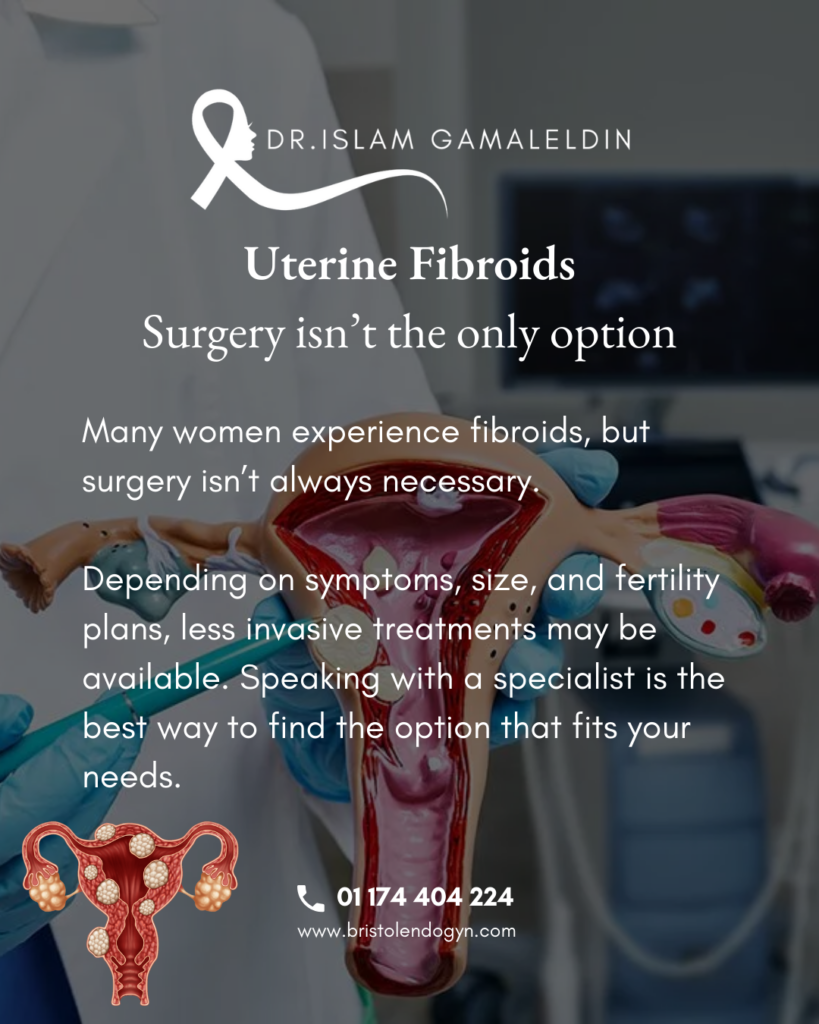
Uterine Fibroids: Surgery Isn’t the Only Option

Jan 9, 2026

Uterine fibroids are noncancerous growths in the uterus that affect many women during their reproductive years. While surgery is often seen as the primary solution, it isn’t the only option. Understanding alternative treatments can help manage symptoms and improve quality of life.

What Are Uterine Fibroids?

Fibroids are benign tumors that develop from the muscular tissue of the uterus. They can vary in size, number, and location. Common symptoms include:

  • Heavy menstrual bleeding
  • Pelvic pressure or pain
  • Frequent urination
  • Back or leg pain
  • Fertility challenges in some cases

Not all fibroids require treatment. Many women with small, asymptomatic fibroids can monitor them without intervention.

Non-Surgical Treatment Options

  1. Medications:
    • Hormonal therapies, such as birth control pills or progesterone-releasing IUDs, can help regulate periods and reduce bleeding.
    • Gonadotropin-releasing hormone (GnRH) agonists may shrink fibroids temporarily.
    • Non-hormonal medications can help relieve pain and reduce heavy bleeding.
  2. Minimally Invasive Procedures:
    • Uterine artery embolization (UAE): Blocks blood flow to fibroids, causing them to shrink.
    • MRI-guided focused ultrasound: Uses high-frequency ultrasound waves to destroy fibroid tissue.
  3. Lifestyle and Home Approaches:
    • Maintaining a healthy weight and exercising regularly may help manage symptoms.
    • Dietary adjustments, including reducing red meat and increasing fruits and vegetables, can support overall uterine health.

When Is Surgery Necessary?

Surgery may be recommended for women with:

  • Very large fibroids causing significant pain or pressure
  • Fibroids affecting fertility or pregnancy
  • Fibroids that do not respond to other treatments

Surgical options include myomectomy (removal of fibroids while preserving the uterus) or hysterectomy (removal of the uterus). Your doctor can help determine the best approach based on your symptoms, age, and reproductive plans.

Conclusion

Uterine fibroids don’t always mean surgery. Many effective non-surgical options exist, from medications to minimally invasive procedures. Early diagnosis and personalized treatment can help manage symptoms, improve comfort, and preserve fertility when needed.


Chronic Pelvic Pain: Causes, Symptoms and Treatment

Chronic pelvic pain is a common condition that affects millions of women worldwide. It can interfere with work, relationships, exercise, sleep and overall quality of life. Unfortunately, many women are told that painful periods or ongoing pelvic discomfort are...

Cervical Insufficiency: Causes, Symptoms and Treatment During Pregnancy

Pregnancy is a time of excitement, but it can also bring unexpected challenges. One condition that often develops without obvious warning signs is cervical insufficiency, also known as an incompetent cervix. Although relatively uncommon, cervical insufficiency is an...

Ovarian Cyst Symptoms: Signs You Shouldn’t Ignore

Ovarian cysts are very common and, in many cases, cause no symptoms and disappear without treatment. However, some cysts can become large, rupture, twist or cause persistent symptoms. Understanding ovarian cyst symptoms and recognising the warning signs can help you...

Can You Have Endometriosis With a Normal MRI?

Yes. It is possible to have endometriosis even if your MRI or ultrasound results are normal. For many patients experiencing persistent pelvic pain, painful periods or other symptoms associated with endometriosis, receiving a “normal” scan result can be confusing and...

Endometriosis Symptoms: 5 Signs You Should Never Ignore | Dr. Islam Gamaleldin

Many women believe painful periods are simply part of being a woman. However, persistent pelvic pain, heavy periods, or ongoing fatigue are not normal and should never be ignored. Recognising the early symptoms of endometriosis is the first step towards receiving the...

Diaphragmatic Endometriosis: Symptoms, Diagnosis & Treatment

Endometriosis is commonly associated with pelvic pain, but it can also affect areas outside the pelvis. One of the rarest forms is diaphragmatic endometriosis, where endometrial-like tissue grows on or within the diaphragm—the muscle that separates the chest from the...

Endometriosis by the Numbers | Key Facts Every Woman Should Know

1 in 10 Women Has Endometriosis Approximately 1 in 10 women of reproductive age has endometriosis. That makes it one of the most common gynecological diseases worldwide. Endometriosis occurs when tissue similar to the lining of the uterus grows outside the uterus....

FORGE 2026: Advancing Innovation in Gynecology, Endometriosis, and Robotic Surgery

FORGE 2026: An Outstanding International Conference in Cairo It was a privilege to participate in FORGE 2026 in Cairo, an exceptional international conference that brought together leading experts in gynecology, endometriosis, robotic surgery, and medical education....

Endometriosis Lifestyle Tips: Diet, Movement, and Stress Management

Living with endometriosis can be challenging, but daily lifestyle choices may help reduce symptoms and improve overall wellbeing. While lifestyle changes are not a cure, they can play an important supportive role alongside medical treatment. Focus on Anti-Inflammatory...

What Is Endometriosis?

Endometriosis is a chronic condition where tissue similar to the lining of the uterus (endometrium) grows outside the womb. This tissue can be found on the ovaries, fallopian tubes, bladder, bowel, and other pelvic structures. Unlike normal uterine lining, this tissue...