
Advanced Minimally Invasive Gynaecological Surgery

Feb 6, 2026

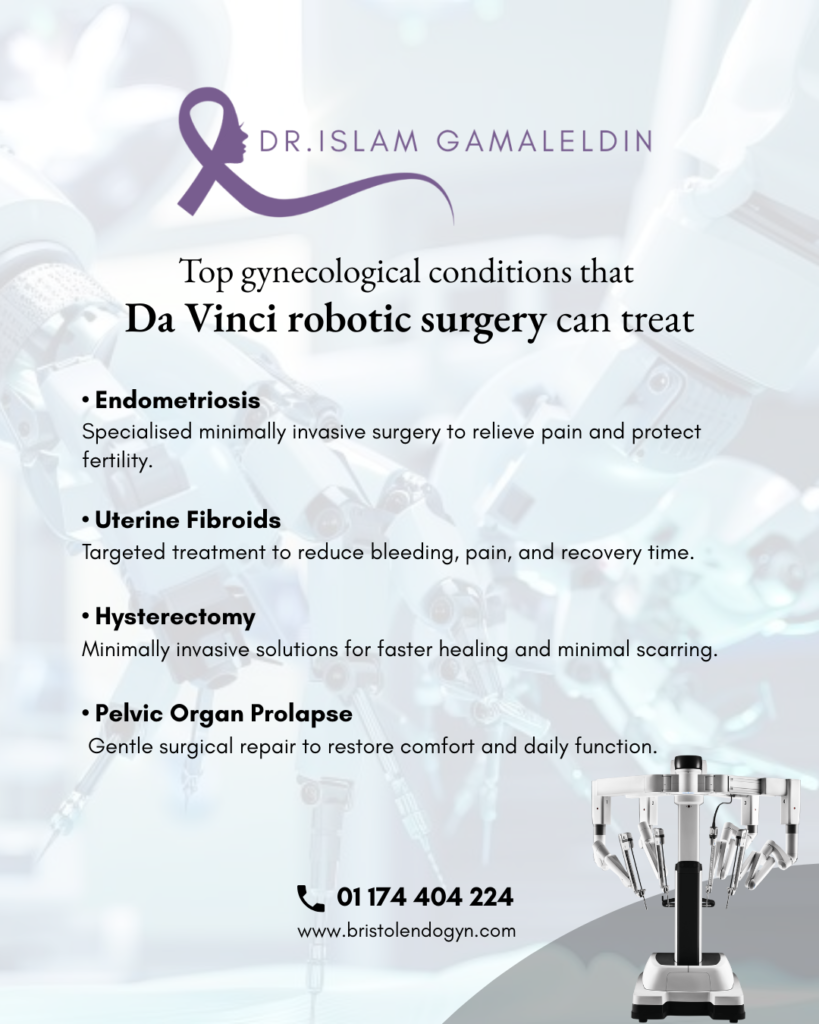
Advances in minimally invasive and robotic gynaecological surgery have significantly improved outcomes for women with complex pelvic conditions. These techniques allow for greater surgical precision, reduced pain, faster recovery, and a quicker return to daily life, while prioritising long-term health and wellbeing.

Below are some of the key conditions commonly managed through advanced minimally invasive approaches.

Endometriosis

Endometriosis is a chronic condition in which tissue similar to the uterine lining grows outside the uterus. It can cause severe pelvic pain, heavy and painful periods, pain during intercourse, and fertility challenges.

When surgery is indicated, precise laparoscopic or robotic excision allows for thorough removal of endometriotic disease, including lesions located in difficult-to-reach areas, while preserving healthy tissue. A minimally invasive approach is associated with less post-operative pain, minimal scarring, and faster recovery compared to traditional open surgery.


Uterine Fibroids

Uterine fibroids are common, non-cancerous growths that may cause heavy menstrual bleeding, pelvic pain, pressure symptoms, and fertility concerns. While not all fibroids require treatment, surgery may be recommended when symptoms significantly affect quality of life.

Minimally invasive myomectomy enables targeted removal of fibroids while preserving the uterus. This approach reduces blood loss, shortens hospital stay, and supports quicker recovery.


Hysterectomy

A hysterectomy involves the surgical removal of the uterus and may be recommended for conditions such as chronic pelvic pain, fibroids, abnormal uterine bleeding, or gynaecological malignancy.

Using minimally invasive and robotic techniques, hysterectomy can be performed through small incisions, offering greater surgical control, fewer complications, reduced pain, and faster recovery, with minimal visible scarring.


Pelvic Organ Prolapse

Pelvic organ prolapse occurs when weakened pelvic floor support allows organs such as the bladder, uterus, or rectum to descend into the vaginal canal. Symptoms may include discomfort, urinary or bowel difficulties, and reduced quality of life.

When conservative treatments are insufficient, minimally invasive surgical repair can restore pelvic anatomy and function. Advanced techniques allow precise support of the affected organs while minimising surgical trauma and recovery time.


Personalised, Fertility-Focused Care

Every woman’s condition and goals are unique. Treatment plans are tailored to provide effective symptom relief while preserving fertility and pelvic function whenever possible. A patient-centred approach ensures care is delivered with precision, compassion, and long-term wellbeing in mind.

If you are experiencing pelvic pain, heavy bleeding, or symptoms affecting your daily life, specialist assessment can help determine the most appropriate treatment options.

Endometriosis Symptoms: 5 Signs You Should Never Ignore | Dr. Islam Gamaleldin

Many women believe painful periods are simply part of being a woman. However, persistent pelvic pain, heavy periods, or ongoing fatigue are not normal and should never be ignored. Recognising the early symptoms of endometriosis is the first step towards receiving the...

Diaphragmatic Endometriosis: Symptoms, Diagnosis & Treatment

Endometriosis is commonly associated with pelvic pain, but it can also affect areas outside the pelvis. One of the rarest forms is diaphragmatic endometriosis, where endometrial-like tissue grows on or within the diaphragm—the muscle that separates the chest from the...

Endometriosis by the Numbers | Key Facts Every Woman Should Know

1 in 10 Women Has Endometriosis Approximately 1 in 10 women of reproductive age has endometriosis. That makes it one of the most common gynecological diseases worldwide. Endometriosis occurs when tissue similar to the lining of the uterus grows outside the uterus....

FORGE 2026: Advancing Innovation in Gynecology, Endometriosis, and Robotic Surgery

FORGE 2026: An Outstanding International Conference in Cairo It was a privilege to participate in FORGE 2026 in Cairo, an exceptional international conference that brought together leading experts in gynecology, endometriosis, robotic surgery, and medical education....

Endometriosis Lifestyle Tips: Diet, Movement, and Stress Management

Living with endometriosis can be challenging, but daily lifestyle choices may help reduce symptoms and improve overall wellbeing. While lifestyle changes are not a cure, they can play an important supportive role alongside medical treatment. Focus on Anti-Inflammatory...

What Is Endometriosis?

Endometriosis is a chronic condition where tissue similar to the lining of the uterus (endometrium) grows outside the womb. This tissue can be found on the ovaries, fallopian tubes, bladder, bowel, and other pelvic structures. Unlike normal uterine lining, this tissue...

Signs of Gynaecological Problems You Shouldn’t Ignore

Signs You Shouldn’t Ignore: Understanding Common Gynaecological Symptoms Women often dismiss symptoms such as pelvic discomfort, bloating, or irregular bleeding as part of everyday life. However, persistent or unusual symptoms may indicate an underlying gynaecological...

Robotic Surgery for Endometriosis | BSGE Conference

Advancing Endometriosis Care: Insights from the BSGE Conference It was an honour to speak at the BSGE Conference in London alongside leading experts in minimally invasive gynaecology and endometriosis care. The discussions focused on the challenges of thoracic...

Endometriosis Specialist in Bristol | Dr. Islam Gamaleldin

If you've been living with chronic pelvic pain, difficult periods, or unexplained fertility issues, you may be dealing with endometriosis — a condition that affects 1 in 10 women yet remains widely underdiagnosed. Finding the right endometriosis specialist in Bristol...

Period Pain: Causes, Symptoms & Treatments | Dr. Islam Gamaleldin

Period pain is one of the most common gynaecological complaints, yet it is also one of the most misunderstood. While mild cramping during menstruation is considered normal, severe period pain that affects your work, sleep, or daily activities should never be...