
Cervical Insufficiency: Causes, Symptoms, Diagnosis and Treatment

Mar 12, 2026

What Is Cervical Insufficiency?

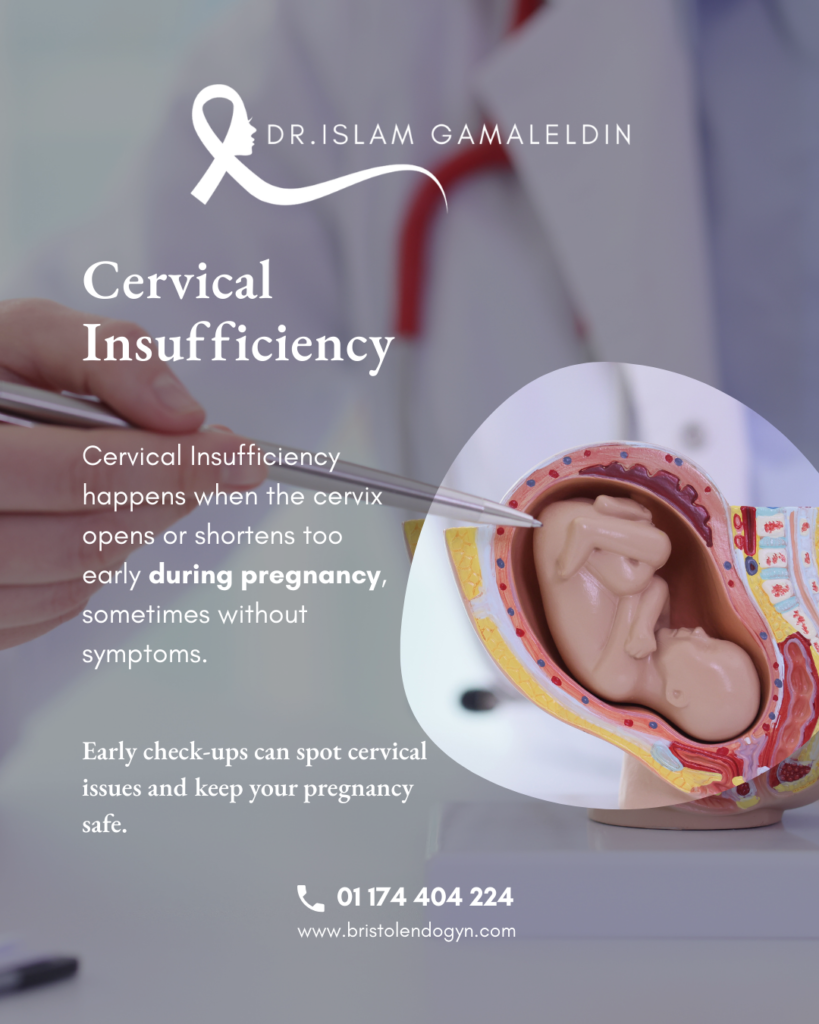
Cervical insufficiency, also called incompetent cervix, occurs when the cervix begins to shorten, weaken, or open too early during pregnancy without contractions or pain. This condition can increase the risk of miscarriage or premature birth, usually during the second trimester.

The cervix normally remains closed and firm until late pregnancy. In cervical insufficiency, however, the cervix may open prematurely, making early monitoring essential for a healthy pregnancy.


Causes of Cervical Insufficiency

Several factors may increase the risk of cervical insufficiency, including:

  • Previous cervical surgery (such as LEEP or cone biopsy)
  • Trauma or injury to the cervix
  • Congenital cervical abnormalities
  • Previous second-trimester pregnancy loss
  • Structural uterine abnormalities
  • Connective tissue disorders

In some cases, the exact cause remains unknown.


Symptoms of Cervical Insufficiency

Cervical insufficiency may occur without noticeable symptoms, which is why regular prenatal checkups are crucial.

However, some women may experience:

  • Mild pelvic pressure
  • Back pain
  • Light vaginal bleeding or spotting
  • Increased vaginal discharge
  • Mild abdominal cramps

Because symptoms can be subtle, ultrasound monitoring of cervical length is often the best way to detect the condition early.


How Cervical Insufficiency Is Diagnosed

Doctors usually diagnose cervical insufficiency through:

1. Medical History

A history of second-trimester pregnancy losses or preterm births may raise suspicion.

2. Transvaginal Ultrasound

This test measures cervical length and can identify early cervical shortening.

3. Physical Examination

In some cases, doctors may observe early dilation of the cervix during examination.

Early diagnosis allows doctors to take steps to help protect the pregnancy.


Treatment Options for Cervical Insufficiency

Treatment depends on the pregnancy stage and medical history.

Cervical Cerclage

A cerclage is a surgical procedure in which a strong stitch is placed around the cervix to keep it closed during pregnancy.

Progesterone Therapy

Hormonal treatment may help reduce the risk of preterm birth.

Activity Modification

Doctors may recommend reduced physical activity or pelvic rest in some cases.

Close Monitoring

Frequent ultrasounds may be used to monitor cervical length throughout pregnancy.


Can Cervical Insufficiency Be Prevented?

While cervical insufficiency cannot always be prevented, early prenatal care greatly reduces risks. Women with a history of pregnancy loss or cervical surgery should inform their doctor early in pregnancy so appropriate monitoring can begin.


When to See a Specialist

If you have experienced:

  • Recurrent pregnancy loss
  • Premature birth
  • Cervical surgery
  • Unexplained second-trimester miscarriage

Consulting a specialist in obstetrics and maternal care can help ensure proper evaluation and management.


Protecting Your Pregnancy

Early check-ups and monitoring can help detect cervical problems before complications occur. With proper care and medical support, many women with cervical insufficiency go on to have healthy pregnancies and successful deliveries.

Gynaecological Surgery Procedures: Specialist Minimally Invasive Care in Bristol

Modern gynaecological surgery procedures can treat a wide range of conditions affecting women's health, from endometriosis and ovarian cysts to fibroids, heavy menstrual bleeding and cervical insufficiency. Whenever clinically appropriate, minimally invasive...

Robotic Gynaecological Surgery: Precision, Expertise and Minimally Invasive Care

Robotic gynaecological surgery is an advanced form of minimally invasive surgery that can provide surgeons with enhanced precision, visualisation and control during selected procedures. In complex gynaecological surgery, technology can be extremely valuable. However,...

Chronic Pelvic Pain: Causes, Symptoms and Treatment

Chronic pelvic pain is a common condition that affects millions of women worldwide. It can interfere with work, relationships, exercise, sleep and overall quality of life. Unfortunately, many women are told that painful periods or ongoing pelvic discomfort are...

Cervical Insufficiency: Causes, Symptoms and Treatment During Pregnancy

Pregnancy is a time of excitement, but it can also bring unexpected challenges. One condition that often develops without obvious warning signs is cervical insufficiency, also known as an incompetent cervix. Although relatively uncommon, cervical insufficiency is an...

Ovarian Cyst Symptoms: Signs You Shouldn’t Ignore

Ovarian cysts are very common and, in many cases, cause no symptoms and disappear without treatment. However, some cysts can become large, rupture, twist or cause persistent symptoms. Understanding ovarian cyst symptoms and recognising the warning signs can help you...

Can You Have Endometriosis With a Normal MRI?

Yes. It is possible to have endometriosis even if your MRI or ultrasound results are normal. For many patients experiencing persistent pelvic pain, painful periods or other symptoms associated with endometriosis, receiving a “normal” scan result can be confusing and...

Endometriosis Symptoms: 5 Signs You Should Never Ignore | Dr. Islam Gamaleldin

Many women believe painful periods are simply part of being a woman. However, persistent pelvic pain, heavy periods, or ongoing fatigue are not normal and should never be ignored. Recognising the early symptoms of endometriosis is the first step towards receiving the...

Diaphragmatic Endometriosis: Symptoms, Diagnosis & Treatment

Endometriosis is commonly associated with pelvic pain, but it can also affect areas outside the pelvis. One of the rarest forms is diaphragmatic endometriosis, where endometrial-like tissue grows on or within the diaphragm—the muscle that separates the chest from the...

Endometriosis by the Numbers | Key Facts Every Woman Should Know

1 in 10 Women Has Endometriosis Approximately 1 in 10 women of reproductive age has endometriosis. That makes it one of the most common gynecological diseases worldwide. Endometriosis occurs when tissue similar to the lining of the uterus grows outside the uterus....

FORGE 2026: Advancing Innovation in Gynecology, Endometriosis, and Robotic Surgery

FORGE 2026: An Outstanding International Conference in Cairo It was a privilege to participate in FORGE 2026 in Cairo, an exceptional international conference that brought together leading experts in gynecology, endometriosis, robotic surgery, and medical education....