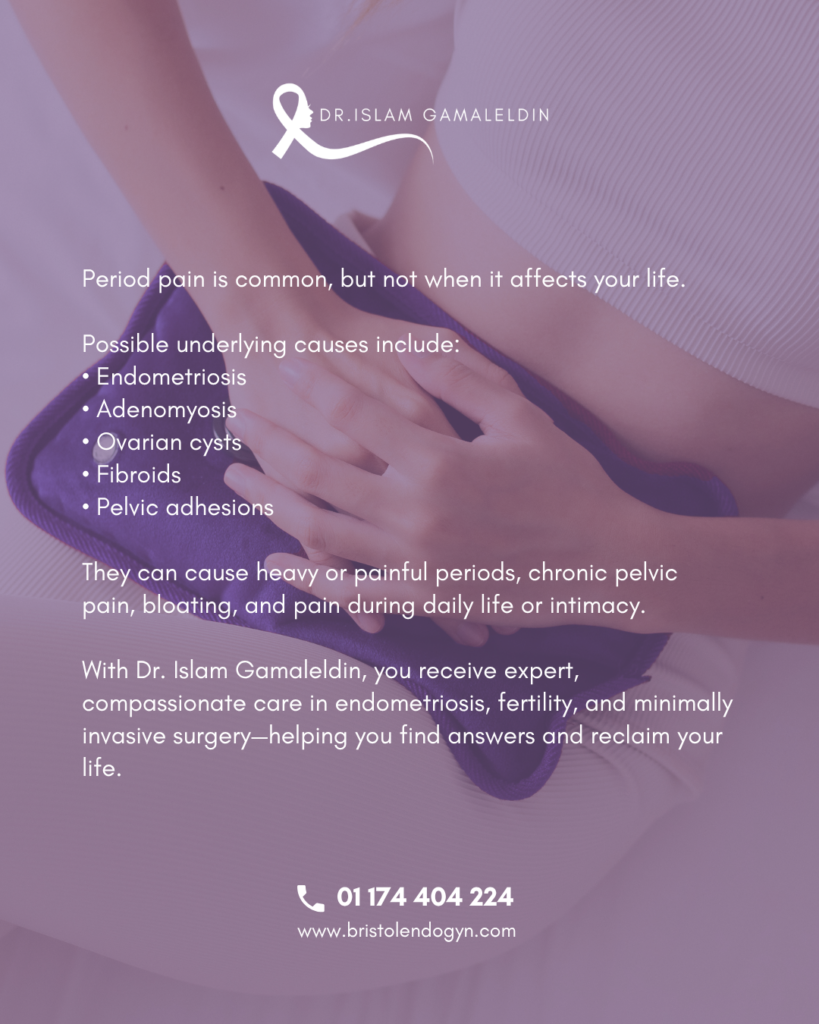
Period pain is one of the most common gynaecological complaints, yet it is also one of the most misunderstood. While mild cramping during menstruation is considered normal, severe period pain that affects your work, sleep, or daily activities should never be dismissed. It can be a sign of an underlying gynaecological condition that requires proper diagnosis and treatment.
In this article, Dr. Islam Gamaleldin, consultant gynaecological surgeon specialising in endometriosis, fertility, and minimally invasive surgery in Bristol, explains the most common causes of painful periods, the symptoms to watch out for, and the treatment options available.
Normal Period Pain vs Pathological Dysmenorrhoea
It is important to distinguish between two types of period pain:
- Primary dysmenorrhoea: cramping with no identifiable organic cause, common in younger women and usually manageable with over-the-counter painkillers.
- Secondary dysmenorrhoea: pain caused by an underlying gynaecological condition, often more severe and resistant to standard treatments.
If your periods regularly stop you from functioning normally, consulting a specialist is strongly recommended. You deserve answers — and relief.
Common Underlying Causes of Severe Period Pain
Several gynaecological conditions can cause painful periods. Here are the most frequent ones:
- Endometriosis
Endometriosis is a chronic condition in which tissue similar to the lining of the uterus grows outside of it — on the ovaries, fallopian tubes, bladder, or bowel. It is one of the leading causes of chronic pelvic pain and debilitating periods, affecting approximately 1 in 10 women of reproductive age. Endometriosis is often underdiagnosed, with many women waiting years before receiving a correct diagnosis.
- Adenomyosis
Adenomyosis occurs when endometrial tissue grows into the muscular wall of the uterus (myometrium). It causes heavy, prolonged, and extremely painful periods, as well as an enlarged uterus. It frequently occurs alongside endometriosis and can significantly impact quality of life.
- Ovarian Cysts
Ovarian cysts, particularly endometriomas (also known as chocolate cysts), can cause persistent pelvic pain, bloating, and pain during intercourse. While some cysts resolve on their own, others require surgical treatment to prevent complications or preserve fertility.
- Uterine Fibroids
Uterine fibroids are non-cancerous growths in the muscular wall of the uterus. Depending on their size and location, they can lead to very heavy periods, pelvic pressure, abdominal bloating, and, in some cases, difficulty conceiving.
- Pelvic Adhesions
Pelvic adhesions are bands of scar tissue that form after infection, surgery, or inflammation. They can bind pelvic organs together abnormally, causing chronic pain that is often worse during menstruation.
What Other Symptoms Should You Look Out For?
Beyond painful periods, these conditions can also cause:
- Heavy or prolonged periods (menorrhagia)
- Chronic pelvic pain unrelated to your cycle
- Significant bloating and abdominal pressure
- Pain during sexual intercourse (dyspareunia)
- Pain when going to the toilet during your period
- Difficulty getting pregnant (infertility)
If you recognise several of these symptoms, do not ignore them. Early diagnosis significantly improves treatment outcomes and quality of life.
How Are These Conditions Diagnosed and Treated?
Dr. Islam Gamaleldin offers a thorough, patient-centred approach combining careful listening, clinical expertise, and advanced surgical techniques:
- In-depth consultation to review your symptoms and medical history in detail
- Pelvic ultrasound and MRI when needed to identify and assess lesions
- Diagnostic and operative laparoscopy: a minimally invasive procedure that allows both diagnosis and treatment of endometriosis, cysts, fibroids, and adhesions in a single procedure
- Personalised fertility-preserving care for patients wishing to conceive
Book an Appointment with Dr. Islam Gamaleldin in Bristol
Are you struggling with severe period pain and looking for answers? Dr. Islam Gamaleldin, a recognised specialist in endometriosis, fertility, and minimally invasive gynaecological surgery, provides expert and compassionate care to help you understand your condition and reclaim your life.
Call us: 01 174 404 224
Website: www.bristolendogyn.com